People LOVE Change! (so why do we say they hate it?)

We’ve got this mantra in our society: “People hate change.” You hear it all the time don’t you? “We tried to implement this new system at our company and it totally bombed. People just hate change and fill-in-the blank just killed it.”  Everyone nods their heads knowingly . . . as if to acknowledge the irrefutable truth that people simply don’t like change.

Only one great big problem. It is a complete load of garbage. Or worse. People LOVE change! Don’t believe me? Let’s do a little exercise.
Change Heart croppedDo you use an MP3 player to listen to music (iPod or similar)? Or maybe you’ve moved on to the next generation channel—streaming music from Pandora or others?  That’s how most of us get our music today.  Do you remember when you used to put a cassette (or maybe your parents did) in your car to listen to music? Do you miss that cassette player today? Were you angry and frustrated when you moved to an iPod or streaming music from CD’s? How about movies? Would you rather go out and rent a VHS tape from Blockbuster (as if you could find one) or do you just love being able to instantly download a movie from Netflix?

I’m betting you love the quality, choice and convenience of the changes in how you access entertainment. How about transportation?  If you would like to go back to riding a horse instead of driving your 200+ horsepower car where you want to go in a fraction of the time (while listening to your favorite tunes in air conditioned comfort), please raise your hand now.  How about we go back to living in caves and reverse all the changes of the last 10,000 years. Any takers?

The issue with change isn’t change….it is how we go about making change happen.

Here is a pretend, but very realistic, example. Let’s say you worked for a company a few years ago that used CD’s for audio training. Every employee was issued a CD player and the CD’s to listen to the training. When they were done, they would take a paper and pencil test to confirm they’d learned all about the new “stuff.”   Now someone in the training department goes to a conference, learns about this uber-cool new technology using MP3 files carried on a small lightweight device with no breakable parts.  The trainer thinks—“Wow, I could deliver all my training more easily, update the content simply, stop buying CDs and tracking them and give my people all that in a smaller device that doesn’t break easily. I’m going to be a hero!!” In the traditional form of implementing change, the trainer buys a bunch of MP3 players (after building a business case and getting approval) and prepares to implement the new technology. Because the trainer knows communication is really important, he puts out a memo to everyone in the company who goes through the training. It probably looks something like this:

To: All Employees

From: Joe in Training

Subject: CD Players for Training

Effective next Monday, we are discontinuing the use of CD players for all training. We have identified a new technology to deliver audio training called an MP3 player. You may not have heard of it before, but it will reduce our training technology costs by 30% and, trust me, you will find it much easier to use.

As we will no longer be supporting the use of CD players for training, all employees are required to return their CD players to the training department by 5pm this coming Friday.  As these are company property, failure to return your CD player to the training department by the scheduled time may result in disciplinary action, up to and including termination.

Thank you and we appreciate your cooperation.

Joe

Wow. How are you feeling about that? Maybe like someone just ran over you with a truck? Like maybe you didn’t matter one-little-bit to Joe because he just pushed you around like you were a two year old about to put scissors into an electrical outlet?  Seriously….. This guy is going to tell me I might get fired because I don’t turn my CD player in by Friday?  Who made him King!! I’ll just show him a thing or two….. (Hmmm, maybe my CD player will get run over in the street? Or my kid will drop it in the toilet or . . . and the list goes on).

That’s the issue with what we describe as “people don’t like change.” People LOVE change—when they want what the change will bring—faster, easier, lower cost, better quality, etc. People HATE being PUSHED around.

And pushing is frequently the change management method of choice. What’s the natural response when someone pushes you? You push back.

How does pushing show up when change is implemented?

  • No “Why” we should implement the change defined or communicated
  • No participation in the process of considering change options
  • No opportunity to test the change to make sure it is better than the current solution
  • No input in the decision to make the change
  • No communication of “What’s in It For Me” (WIFM)
  • Not enough training on how to make the change work
  • No appreciation for your effort in making the change
  • LOTS of mandates, requirements and policies to adopt the change—or else.

Rational people push back when treated that way. Some actively (I’m not going to use the new system/tool/process) and some passively (I’m really, really sorry, but my daughter’s Golden Retriever ate the CD player).  Either way, we are left with a well-intentioned change that isn’t delivering the expected results.

What if we PULLED to implement change instead of pushing? Have you noticed that pulling often lets you move a lot more than when you push? When you pull someone with you and they choose to go to the same place you are going, their energy adds to your own. When you push, it’s always just you and you alone. By pulling, I mean adding every one’s energy together to make the change happen-because everyone wants the change.  Pull is about leading in ways that create shared desire for the new way of doing things.

What if Joe had used Pull instead of Push?

What if Joe had first found a small group of potential early adopters?  You know the type—respected by their coworkers, smart, great critical-thinking skills (no push-overs, pun intended).  Joe could have approached them and said:

“Hey, do you have a minute? I recently learned about this really cool new technology I think might be good for our audio training . . . but I’m not sure yet. It is about 1/10th of the CD player’s weight, has no moving parts, sounds crystal clear and can carry thousands of recordings. It’s really cool and brand new on the market.  I bought five of them just to check them out and I am hoping that you would try it out for me-and the company.  If it works, that’s great. Even better would be if you and the other four people trying it out find a bunch of ways to make it work even better for us—so it really fits our business.  Would you be willing to give it a shot? After you’ve tried it for a little bit, I’ll get us all together to get your feedback and figure out what, if anything, we do with it.  If it doesn’t work, we will have learned a valuable lesson—thanks to you. Oh… and one other thing, if we do decide to use it in some way, I’m hoping you will help others learn about it and why it is better for us. But only if it is better than the CD players we are using today. Are you game?”

What did Joe just do? He asked a group of smart, respected influencers to help him figure out if his change was good to do. Then he asked them to make it even better. To top it off, he asked them to help generate buy-in and enthusiasm with the rest of the team—but only if they believed in it.  If it were a religion, Joe would have just started recruiting a bunch of apostles.

In a pull approach to change, Joe would then get their feedback, listen, make the change better (or kill the change it if it didn’t work). Then Joe would have told everyone about the test and asked his early adopters to be part of that process and spread the word.  Joe would even ask them to help him refine the training on how to use the MP3, so everyone knew how to use the device when they got it and didn’t get frustrated by the new tool. When it came time to introduce the new training devices more broadly, everyone would know why, have confidence the “new way” would be a big improvement over the old school way they were leaving in the dust and be lined up around the corner to get a hold of the new device!

All because the way Joe approached the change didn’t push on anyone. Instead, Joe used participation, listening, communication and training to pull his team to the change—he created a situation where people WANTED the change.  Sure, there will always be a few people who are so comfortable with the status quo that no matter what you do they won’t get enthusiastic about the change.  When you create a situation in which people have reasons to want the change, most of your team will ask “When do we start?” because they are excited about the future. Just like you were excited the first time you used an iPod to listen to a song you love or downloaded a great movie from Netflix.  You liked it didn’t you? That’s because you wanted it.
People Love Change Cropped

People love change. Most of us like the latest, greatest, new and improved.  People line up around the corner for the most innovative technology.  We remodel and upgrade our homes to make them “better.” We go on a vacation to a new place to learn and see more of our world. Many of us can’t wait to try out the cool new restaurant that opened up around the corner.

We don’t like being pushed around.

So don’t push. PULL. Approach every change in a way that builds shared ownership and enthusiasm for everyone who will be a part of your change. People will love it. When you lead with that kind of respect and care, they might kind of like you too. Most importantly, your change will get the results you expect—because your people will DO it.

There is a very bad joke about change that captures all of this simply and perfectly. Are you ready?

Question: How many psychologists does it take to change a light bulb?

Answer: Only one. But the light bulb has to really want to change.
The Meaning of Giving

A couple of weeks ago a close friend asked me “What do you think is the meaning of life?” This holiday season, I’m sharing my response with all of you.

Having, creating and building meaning is likely the deepest “want” most of us have. We want to know that our time here, together, truly means something. For leaders of all teams, creating meaning is the key driver of engagement and commitment because when we know what we are doing means something important to us, we want to do whatever it may be better, faster and smarter.

I believe most people already know the answer to the question my friend asked me, though many people get confused and misled by more superficial things. Here is my reply to my friend:

A few years ago, the VP of Marketing for my business (a large global company with many billions of dollars in sales) was in my office around 7pm. We’d been talking about a number of business issues and were getting ready to wind up our day, when I randomly asked him what he thought the meaning of life was. He was (and is) a very good man.

His answer was breathtaking for both its accuracy and its candor in a corporate setting:

Love.

I asked him if he had read Viktor Frankl’s book “Man’s Search for Meaning“–which a survey conducted for the Library of Congress ranked as one of the ten most influential books of the 20th Century. He had not, so I shared the essence of the book with him.

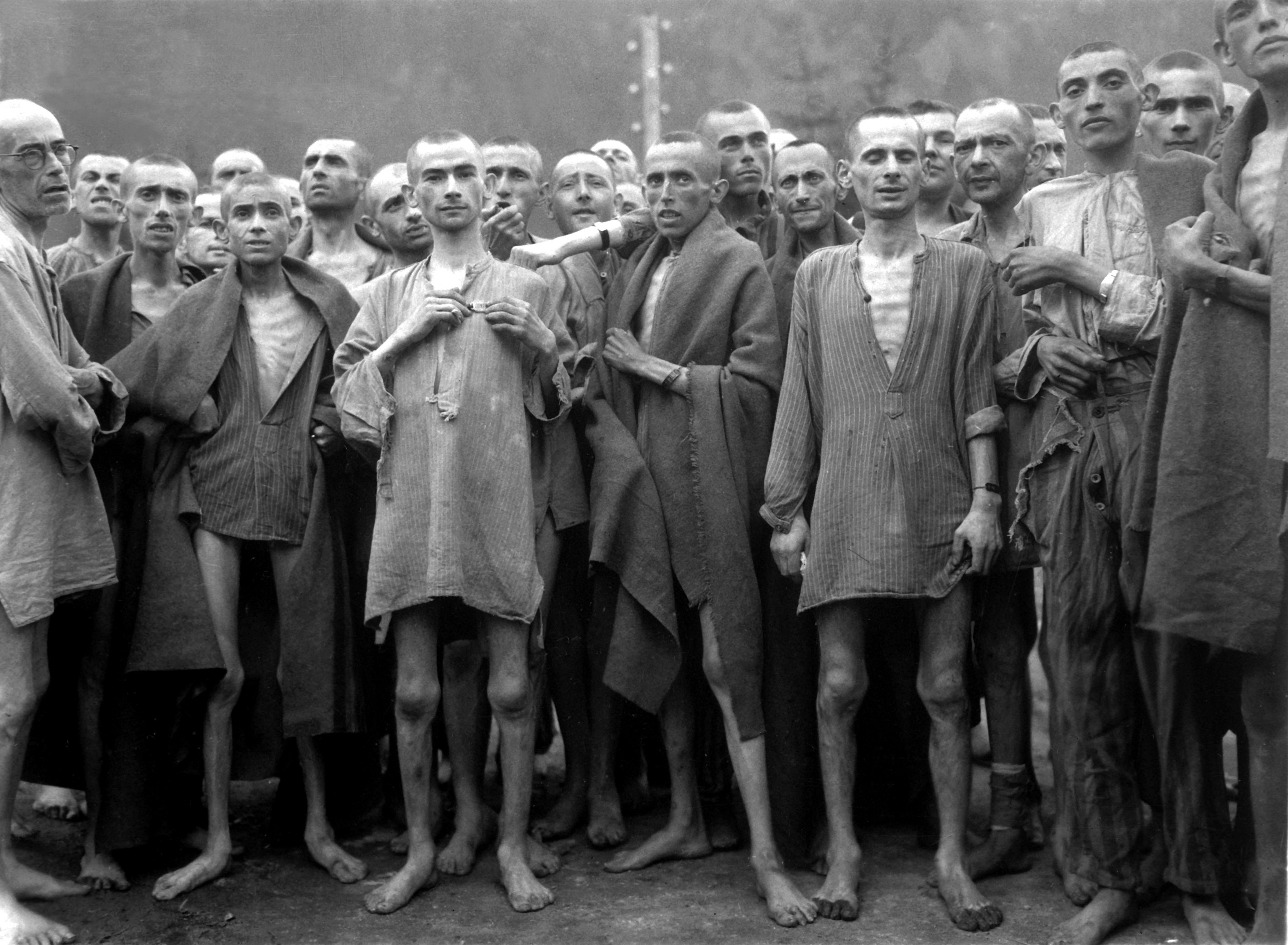
WAR & CONFLICT BOOKERA:  WORLD WAR II/WAR IN THE WEST/THE HOLOCAUSTViktor was a young psychiatrist in Vienna when Nazi Germany took control of Austria.  As Jews, he and his wife were both taken to concentration camps. The first half of his book is about how he survived the atrocities of that experience. The second half is his own approach to helping people which he called “logo therapy.” Logo in its original definition is not about brand symbols—logo is Greek for “meaning.” Logo therapy is literally “meaning” therapy.

Viktor’s big insight about meaning is very simple. He got through the concentration camp because he believed that he needed to survive to take care of his wife. He knew that his life mattered because he decided to do whatever it took to survive so he could care for and love her. No matter what. He wasn’t important. She was. So he could put up with anything. The worst things people could do to each other. He and other prisoners in the concentration camp also found meaning by giving to and caring for each other.

Viktor’s wife didn’t make it. He did, remarried and had one daughter. He wrote his book, and spent the rest of his life helping people apply his wisdom–all over our world.

Our lives have meaning because of what we can do for others, not because of what we do for ourselves. This is why one study after another shows that buying some new toy or gadget gives us a temporary emotional “high” that is quickly gone. Doing for ourselves produces only a brief moment of joy and meaning. Doing for others? We know we made a difference and feel great inside. And we remember the feeling.

It is better to give than to receive” is often quoted but perhaps we don’t fully appreciate the truth in those words. In many ways the giver actually gets more than the receiver–because the giver has validated that their life matters and has meaning. Christmas (and all similar holidays) are likely such a wonderful time of year for so many people because we feel so great about giving to others. It is those who have no one to give to who feel sad and depressed during the holidays.

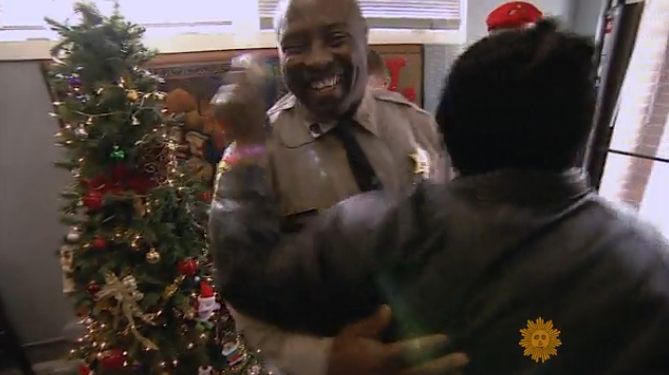
police-give-away-secret-santa-money-Recently, a “Secret Santa” in Kansas City used his wealth to create meaning, change relationships and build trust between police officers and people in need in the community they serve by giving. He gave a large group of police officers $1,000 each to give to those they saw in need, $100 at a time (letting each officer give to ten different people).  The reaction of drivers of beat-up older cars after being pulled over and receiving some much-needed cash instead of a traffic ticket was priceless. Instead of being seen as the bearer of bad tidings, the police officer was seen as a caring person, there to provide help. The whole relationship between law enforcement and the people involved was redefined in an instant. Instead of preparing to argue over their driving, people opened their arms to share a hug. These acts of giving created meaning for the police officers, the people they helped and, of course, the “Secret Santa” himself. You can learn more about it here:

http://www.cbsnews.com/news/sheriffs-deputies-kindness-brings-drivers-to-tears/

Meaning comes from giving to others. Helping them. Making a difference in their lives. Of course, the biggest meaning comes from choosing to make one person your special partner in life. A lifetime of meaning and giving is a lasting source of happiness, if it is built on the right foundation.

To achieve meaning for your team (the most important want of all)–give and lead them to give too. Give thanks. Give a helping hand. Give your knowledge. Give a smile. Find a cause worth giving to as a team and then do it. For when we give, we create meaning.  When we know and feel what we are doing truly means something, we will do all we can to make it happen. Because now, we care.

Image Sources: Wikipedia, CBS

Building Value: Can + Want x Do = Results

Can Want Do Chart

Can, Want, Do. The three core drivers of performance and achievement for individuals and teams. Today, let’s explore the combination of these three drivers as a whole a bit more fully before we get into the specifics of each and how we can simply and powerfully leverage them personally and for our teams.

These three combine to make results happen—and none of them by themselves is sufficient to do so. Can, Want and Do are not the proverbial three-legged stool of equals. They are a formula for delivering and improving results, once you know what you want to do.  Before Can Want and Do can work their magic, you must know what you want to accomplish– something that creates more value than what you began with. Can, Want and Do are no substitute for vision and purpose or, for a business, a business model that “works” by creating profit when executed.  Simply put: Can + Want x Do = ResultsFirst, you must define what you value and the measured results you will achieve.

Value

Can, Want and Do are the building blocks of growing value. Most of us first think of value in the financial sense of the term. How much more money do we have today than yesterday, last week, or the year before?—and how that money compares to others with whom we compete or compare ourselves. Growing $ value is certainly important– and essential for a business in order to survive, grow and continue doing things that create other forms of value. Growing financial value is one of many forms of creating value in the complete definition of the word. Value can include social good, survival, pride, personal growth, making a difference (more on meaning to come in future posts) and more. What brings value to you in your life?

Can, Want and Do are the ingredients that let us achieve whatever we have decided we value. By building, improving and measuring Can, Want and Do effectively, we significantly multiply the potential of creating whatever we choose to value—including financial growth.

CAN: Do I (and my team) have whatever it is we need to do what we would like to do?  Do we know how to do it? Are we good at doing it? Can we get better? Do we have the tools to do it? Supplies? Are we better at doing it than others? If not, it might be time to get better at doing it or let someone else do it and do what you are better at doing than anyone else.

Can is essential. If there is something we value that truly can’t be achieved, we need to redefine what we value and let go of that dream until a time comes when it is achievable.  (That’s rarely true but does apply to some goals. For example, traveling to another solar system with today’s technology). With a challenging and possible to achieve goal, figuring out what it takes to say Yes, we can! is an essential part of the formula.

WANT: Is this something We/I truly want to achieve? Do we intensely and passionately value it? Are we committed to it? Could we become more committed to it–so we do it even better, faster, more cost-effectively and with more value creation?  Can we grow our Want to an even greater and more powerful level? Does everyone on the team want the same result? If not…what are we going to do about that?

Without Want we can have all the Can in the universe—but very little Do will happen. To the degree Do does occur without much Want, it will be easy for someone else who has more Want to out-Do us, even if they have less Can. Because they will use the Can they have with greater energy and purpose—eventually building more Can as a result of their Want.

Want is in the middle of Can, Want, Do—because without Want, neither Can nor Do will create much value.

DO: Nothing matters until we Do it.  Before that, it’s just a dream. A possibility of what could be real. Of course, everything starts as a vision of what could occur. It is the aligned, purposeful and always improving execution of that vision, powered by Want and Can that makes it real. There are lots of tools to help us focus, align and measure our Do so we get better at our Doing every day.  Doing and doing better all the time is where Can and Want meet the road and make whatever we choose to value happen.

Did you notice the multiplier in Can + Want x Do = Results? Doing multiplies the commitment in Want and the ability in Can into actual, real world value. Without Do, Can + Want = 0.

Future posts will explore Can, Want and Do as distinct concepts.  I’m hoping this will become a conversation among us. So bring on your ideas, reactions, debates and build-ons!  I will certainly share insights and examples on what I have learned from those who taught me—and hope that you will share your insights and experiences too.

My next post will explore the deepest, most important Want of all.

The Three Essentials of Performance or Yes, We Can (if we want to)

Words.  Do they matter? A few sound waves. Some symbols on a page—today they are gone with the touch of a delete key or swipe of your finger. Yet, we all know that “the pen is mightier than the sword,” right?

Indeed, without the words, there would BE no sword. For words let one sword maker pass knowledge and skills onto the next, who further refined his craft and passed that knowledge onto the next and so on.  Without words, swords would never have been developed or refined. It would be easy to argue we would be better off without swords. Yet without words we would not have physics, song, engineering, novels, history— or civilization as we know it. Without words our communication would be stunted— our relationships and connections reduced to their most basic level. Words make true communication possible and communication makes humanity at its best, worst and in between possible. Words make us uniquely human.

Simplicity

Slide1

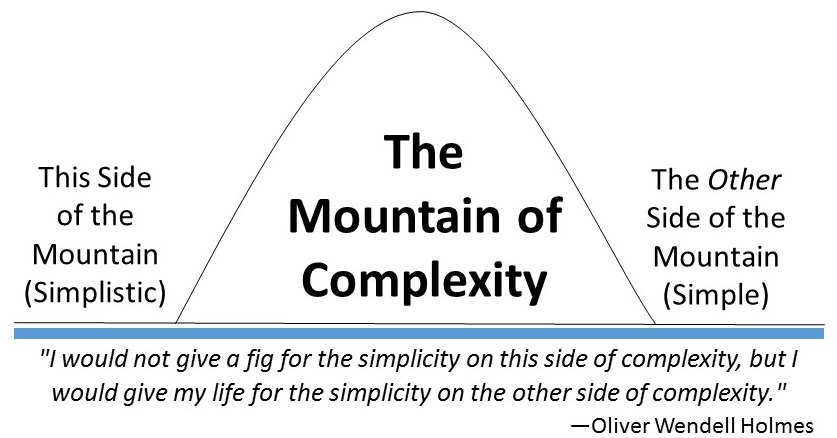
Some people take great satisfaction in utilizing complicated words to communicate. Big words can make us feel sophisticated and masters of some special body of knowledge while everyone else gets to figure out “what did that person just say?” Complicated words may feed our egos-but they often block understanding. How about we use simple words we all understand?

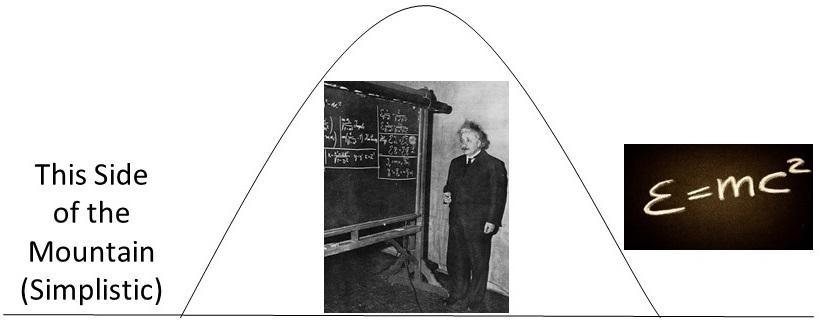
Slide2True simplicity is valuable. Albert Einstein got that. So did Steve Jobs. Yet, we often stay mired in complexity.  When we get through complexity to the essence of something, we find a core truth that can spark innovation and action in many dimensions. I think of complexity as a mountain of “stuff” that we must work through to get to the powerful, simple truths on the other side of it.  Einstein did that by working through huge complexity to develop the theory of relativity. The relationship between energy and matter is certainly a simple and very powerful truth.  iPhones aren’t quite at the same level—but they are both simple and sweet!

Performance

Almost every team, business, non-profit (or any group of people) will answer “Of course!” when asked if they’d like to improve their performance.  Getting better tomorrow is built into our DNA. But how? There are a huge number of theories, frameworks, models, hypothesis, concepts, tools and really big words on the topic of improving performance. There are so many possibilities to pick from: Capability, talent, competencies, knowledge, skills, engagement, commitment, passion, training, motivation, purpose, execution, extrinsic rewards, discipline, learning, performance, development, accountability, recognition and so many more. All of them with lots of syllables. What if we could reduce the complexity of all that and identify the fundamental drivers of performance?  What if we moved through the confusing academic and HR-ish language to what really makes a difference?   We might be getting to something that we could all understand, act on and use in many ways to do better tomorrow than we did today.

Simple words are clearer. More powerful. Unmistakable in their meaning. They get to the essence of things.

When it comes to improving our performance, there are three truly simple ideas on the other side of “Mount Complexity.”

Can—do we have the ability to do what we have in mind?

Want—do we want to do it?

Do—are we doing it?

Nothing happens until we get to Do.

Do doesn’t happen without Can and Want.

If we have Can but no Want, nothing happens.

That’s why Want is always the fundamental driver of individual and team performance. Desire beats require— because when we truly, deeply Want to do something, we will do whatever it takes to figure out the Can and then Do it.  When we Want to do something Together—almost anything is possible (like putting a man on the moon with less computing power than we have in our “simple” iPhones today).  You know it’s true— look at what you’ve accomplished in your own life that makes you proud. What role did Want play in that?

Can. Want. Do. is about these three simple truths that are the formula for performance and results for all individuals and teams (I like the word teams more than organizations—it is simpler and more real).

I’m looking forward to exploring Can, Want and Do with you. That’s exactly what this blog will do. Our journey has begun.  Let’s learn together.

P.S. Yes, words are more powerful than swords. After all, if we take words out of swords, all that will be left is an “s”—and there’s not much we can do with that. No matter how much we want to.