What exactly is performance? Is performance getting something done? Is it doing something better today than you did yesterday? Is performance doing something better than anyone else? Perhaps performance is getting the most out of what you’ve got? Performance is all those definitions and more.
Performance is creating something better than what we started with. We start with wherever we are and whatever we have at the beginning. Let’s call our starting point our Base. Then we do something to make that better, in other words we add Change. The Base plus what we Change gives us our Results. Change is the difference between what we started with (Base) and what we ended with (Results). In other words:

Today, let’s look at performance from the “Want” or commitment perspective. The intensity of desire an individual or team has to achieve a result has a huge multiplying effect on the results they produce. When someone really and truly wants to make something happen, it shows up in persistence, resilience, focus and alignment. One compelling way to look at how much an individual or team wants to do something is to measure how much the performers give for what they get. Essentially, that’s a Return on Investment (ROI) definition of performance commitment: the more a performer gives in focused, purposeful effort for what it takes to create that commitment, the greater the return. Think about times in your life when you deeply and truly wanted to make something happen. You willingly moved mountains to make it so, didn’t you?
Often it takes very little in financial investment to create a deep and powerful “Want.” Most of the time when people intensely commit to achieving a result, that desire occurs because they have decided that the result truly means something to them. Want is most often driven by powerful emotions—pride, love, feeling good about yourself, doing something that creates meaning in your life. The more powerfully these emotions are engaged, the greater the commitment to the result—and the greater the “return” in the performance people give for what they get.
Let’s apply this idea to the performance of teams. Here is a one question quiz for you: Using the above definition, What is the highest performing team in the United States of America?
By team I mean any group of people-business, non-profits, sports, etc. In other words—what group of people gives the most for the least? From my perspective, that’s the definition of a high performance team because that team has the greatest difference between what they start with (Base) and what they give (Results).
Take a minute and think about it. I’ll share my answer below.
Do you have your answer? Here’s mine.
Q) What is the most you can give?
A): Your life. There is no greater give.
Q) Who offers to risk their lives?
A) Lots of dedicated, committed people—police, fire fighters, military, health care professionals and more.
Q) Who is most at risk of losing their lives?
A) The Armed Services. They can be at war where people are intentionally trying to kill them. From a “Base” perspective, they also don’t get paid a lot to put their lives at risk. So there is a lot of performance “give” from the Base to the Result.
Q) Which branch of the Armed Services is most likely to be at risk?
A). There is one branch the United States turns to time and time again when there is a risk to our safety and security. They are nearly always the first to enter a conflict wherever it may be—truly “the first to fight.” They also guard every U.S. Embassy around the world. There motto in English is “Always Faithful.” And they are—to their country and to each other.
My answer to the highest performing team in the United States question is (scroll down for answer):

Think about it– there are many high performing teams in every society. Great sports teams, corporations which consistently excel (Costco, Apple, etc.), non-profits who create great value through their performance and do wonderful things for people in need. Is there another team that gives more for less than the United States Marine Corps?
The United States Marine Corps offers up their very lives in support of their mission and each other. The Marines are nearly always the first to enter a dangerous situation and they do so with consistent effectiveness. There is nothing greater that a person can give than risk life and limb—and the financial cost (Base) of doing so isn’t very much relative to what the Marines risk and the results they achieve. No one becomes a Marine to get wealthy.
So why do men and women become Marines, putting their lives in potentially great risk to serve their country, execute their mission and help each other?
Kool-Aid.
100% Organic, Natural, Authentic Kool-Aid.
Sometimes you’ll hear a cynic wisecrack “Watch out, he really drank the Kool-Aid”—as if that were a horribly stupid thing to do. When the Kool-Aid is real, authentic and based on good values, there is nothing better in the world to drink. It is at the foundation of every great team in every society. The cynics have it so wrong.
If you don’t know, the expression “drinking the Kool-Aid” developed as a result of a senseless tragedy in Jonestown, Guyana in 1978. Hundreds of members of a religious commune intentionally drank a flavored drink laced with cyanide at the direction of their leader and died. The victims bought into an incredibly destructive set of beliefs and acted on those beliefs. It wasn’t actually Kool-Aid, but that became the brief description for blindly following bad beliefs and values to a tragic end.
That doesn’t mean all “Kool-Aid” is bad. It simply means bad Kool-Aid is bad. There is good, and even great Kool-Aid, by which I mean a set of beliefs, principles, values and behaviors which guide a group of people in how they perform. Every great human organization is based on its own “Kool-Aid” and uses that to bring new members into the team and guide them in how they will act within the team.
Every nation has its own “Kool-Aid” in the form of pledges, anthems, flags, declarations, constitutions and more. Religions distribute their “Kool-Aid” through the stories in their texts. The Bible, Torah, Quran, Vedas, Homeric Hymns, the Vesta and every culture all teach beliefs, values and behaviors through stories. In the U.S., the Declaration of Independence, Pledge of Allegiance and the story of George Washington admitting to his father that he chopped down the cherry tree because he could not tell a lie are all ways in which we teach and reinforce our national “Kool-Aid.”
The U.S. Marine Corps has some of the most powerful Kool-Aid in the world: you don’t “join” the Marines, you become a Marine. Through the recruiting process and most critically through what the general public thinks of as “Basic Training” new recruits are transformed from individuals to members of an extraordinarily committed team who share these three values:
Honor Courage Commitment
In 12 weeks of training, new recruits learn the values, stories, expectations and behaviors of a Marine. Yes, most certainly their bodies are conditioned. More critically, their minds, beliefs and behaviors are developed in alignment with the Marine Corps mission and values. Everything they do and experience during those twelve weeks is designed to shape them into a cohesive team with a shared set of beliefs, purpose and performance expectations. And it works—the evidence is plain to see.
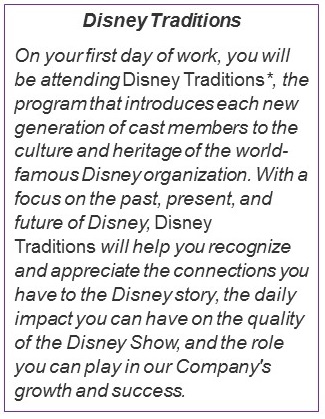
In the business world, the Basic Training used in the Marines and other Armed Forces is commonly referred to as “onboarding” or “orientation.” High performing businesses take it very seriously. Just like the Marine Corps, they design and deliver an experience to every “recruit” that does the same thing. For decades, Disney’s theme park business has put every new “cast member” through their Disney Traditions program starting on day one. It pays off in the performance of every cast member day after day as they serve guests in their theme parks around the world.
Here is a real example of “Marine Values” in action in the business world—long after the individual involved had left active duty. “Customer Service, Inc.” is a real multiple brand service business with over 100,000 front-line employees directly serving customers in thousands of locations across North America and billions of dollars in revenue every year. “Customer Service, Inc.” brought in a high-powered and highly-regarded Executive Compensation Consultant to take a look at the company’s compensation practices– salaries, incentives, benefits, perquisites, etc. After looking at the company’s compensation plans, what competitors did and conducting a number of interviews, the Compensation Consultant met with the CEO to share his recommendations. He told the CEO that he found that there were lots of extra perquisites (cars, corporate jets, and other privileges) for executives. The Compensation Consultant recommended that the perqs and benefits that weren’t based on performance be reduced and that compensation be focused simply and powerfully on rewards for good short and long-term results.
The CEO listened and then told the consultant that he had learned about leadership when he attended the Air Force Academy in Colorado Springs. The CEO said: “In the Air Force, the people on the ground take care of the people in the jets. The pilots are the ones in charge and that’s the way I think we ought to treat our execs.”
The Compensation Consultant replied: “I understand. You know, I was in the Marines and that’s where I learned about leadership. In the Marines, the officers get in the trenches with their troops. They make sure their team eats first and they lead the charge with their men when the battle begins. Your tens of thousands of employees are just like that and your business will perform better if your execs are in the trenches with your people, not up in the air.”
The Consultant didn’t get that job. But he was absolutely right. He learned those beliefs in the Marine Corps and they continued to influence his advice to the wealthiest and most powerful CEOs and Boards in America. The Marine Corps gave him their “Kool-Aid” to drink over and over again during his time in the service and it continued to shape his thinking, beliefs and behavior for the rest of his life. That is some pretty good and powerful stuff to drink from my perspective. How much more effectively would your team perform if everyone on the team was fully committed to the same great beliefs, principles and values?
Want— the desire to perform— is at the foundation of performance. Great, good-for-you “Kool-Aid” is the rocket fuel that creates the desire to perform for every high-performing team, organization and group of people. Organic, 100% natural, authentic Kool-Aid based on great values, beliefs and principles which a good person can look at and say—“YES, I believe those are good things that I want to stand for too” is what propels every effective and lasting human organization to perform as an aligned team. It works for the U.S. Marine Corps. Every country tries to do it (some more effectively than others). So does every religion.
Take a minute and reflect on the highest performing team you have been a part of in your life so far. Was there a clear purpose? A set of values/principles that guided your behavior? Tribal stories of great achievements in the past? Did everyone on the team want to live by them and make them real every day?
Semper Fi.
 Can. Want. Do!