3 Little Words that build BIG Teamwork—and 3 that destroy it!

Have you noticed how nearly everyone frames their interpretation of a situation with words that reinforce and validate their point of view?  If you want an extreme example, watch MSNBC cover a story on a topic they are supportive of and then watch Fox News cover the same story—with the same relevant information available to both reporters (minimum wage increases would be a great example). The use of language to frame and support a point of view is striking—making the speakers’ perspective come across as it-is-so-obvious-it-must-be right to the listener.

I’ve watched the same behavior happen in teams—or what should be teams.  It would seem completely rational and desirable that everyone inside a business would think of themselves as “on the same team”—after all, if an organization is fighting within itself, it’s wasting energy that could be used to improve. Too often, that’s not the way it works. Instead, one function or another in the company blames the other, passively denies needed information and even actively sabotages another function—thinking somehow that this is the right thing to do—“we’ll show them!” kind of thinking.

I was leading the HR/People function in a business in which the Chief Marketing Officer and Chief Operating Officer were actively “at war” with each other.  The Marketing team was essentially responsible for defining our product and services and Operations delivered them. It was impossible for the business to fully perform without those groups working together. But these two leaders weren’t talking much to each other.  At least one of them would send “emissaries” with bad news/problems to the other—sometimes when it was too late to do much about it except get really, really frustrated.  Joint planning and problem solving sessions were almost never held between the teams.  One of them even decided to hold a separate holiday party and not participate in a company-wide event so their teams wouldn’t socialize!

Who paid the price? Customers in the form of poor execution by the business. Investors in missed opportunities for both revenue and lower costs/higher margins. And their people—who couldn’t truly do their jobs, learn and grow without working more closely as one team.

What drove all that bad behavior? Three words that don’t help when everyone is supposed to be on the same team: I, Me, and Mine.
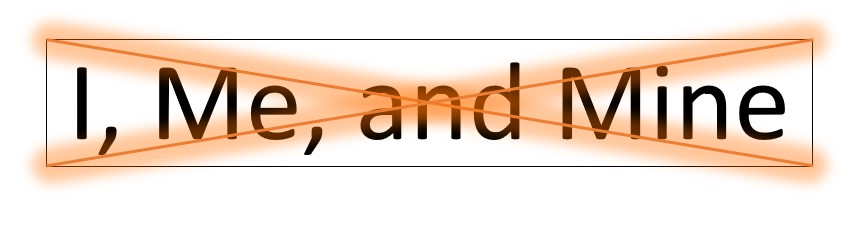
I Me Mine

In that case, I, Me and Mine, were the people inside the teams led by two C-level leaders.  The “us” was “my” people and the “them” was the other leader’s people in the same business.  Problem—the real team was the ENTIRE business. No function took care of a customer, generated revenue or produced earnings by itself. That ONLY happened when the whole team, everyone in the business, worked together.

What are the three powerful words that were missing from these two leaders every day conversations?  WE, US, and OURS.  Those three words weren’t heard much at all—unless they were being used in the “royal” sense to really refer to “mine”.

We Us Ours

I met with each leader and shared what I’d heard from their own people—and how frustrated their people were with “the war” between them. No finger pointing or blame—simply shining a bright light on something they both knew was true—but were ignoring by letting it stay in the shadows.  Both of the senior leaders acknowledged it was going on. I asked each of them individually: Do you think the way we working today is effective?  Who is the WE in our business—who exactly is on OUR team? Is the current state helping or hurting OUR business? What should WE do about it?

When the bright light came on, each leader owned their personal contribution to the problem—and both said they wanted to change.  I didn’t have to ask them to change—it was apparent as soon as it came out in the open.  The three of us met together to talk about the issues and clear the air—not with finger pointing—but with personal accountability.  Together, we defined expected behaviors and committed to them, including what WE needed and would give each other.  Then WE built some new cross-functional teams and processes and put them in place—along with shared ownership of key metrics that everyone influenced.

What happened? Just what you’d expect—better teamwork, improved execution to our customers, and a foundation of trust and communication for bigger changes to come.  All of that started with recognizing that those three words—WE, US and OURS—included EVERYONE in the business—and that the only “them” had to be our competitors who were trying to take our customers away from us.  The us and them inside our business was hurting us—and helping our competition.

That’s an example of the big power of WE, US and OURS and is true for every shared effort. The more we as leaders create a culture of WE, starting with our own behavior as the standard for all to see, the better our people will work together. That’s a key element in getting your competitors customers to leave THEM and bring their dollars to US!

If you have I, me and mine or their evil cousins, us and them, living inside your business—drive a stake through their hearts.  All groups of people work better when they work together.  That starts with the example leaders set and it shows up in the words they use every day.
The Meaning of Giving

A couple of weeks ago a close friend asked me “What do you think is the meaning of life?” This holiday season, I’m sharing my response with all of you.

Having, creating and building meaning is likely the deepest “want” most of us have. We want to know that our time here, together, truly means something. For leaders of all teams, creating meaning is the key driver of engagement and commitment because when we know what we are doing means something important to us, we want to do whatever it may be better, faster and smarter.

I believe most people already know the answer to the question my friend asked me, though many people get confused and misled by more superficial things. Here is my reply to my friend:

A few years ago, the VP of Marketing for my business (a large global company with many billions of dollars in sales) was in my office around 7pm. We’d been talking about a number of business issues and were getting ready to wind up our day, when I randomly asked him what he thought the meaning of life was. He was (and is) a very good man.

His answer was breathtaking for both its accuracy and its candor in a corporate setting:

Love.

I asked him if he had read Viktor Frankl’s book “Man’s Search for Meaning“–which a survey conducted for the Library of Congress ranked as one of the ten most influential books of the 20th Century. He had not, so I shared the essence of the book with him.

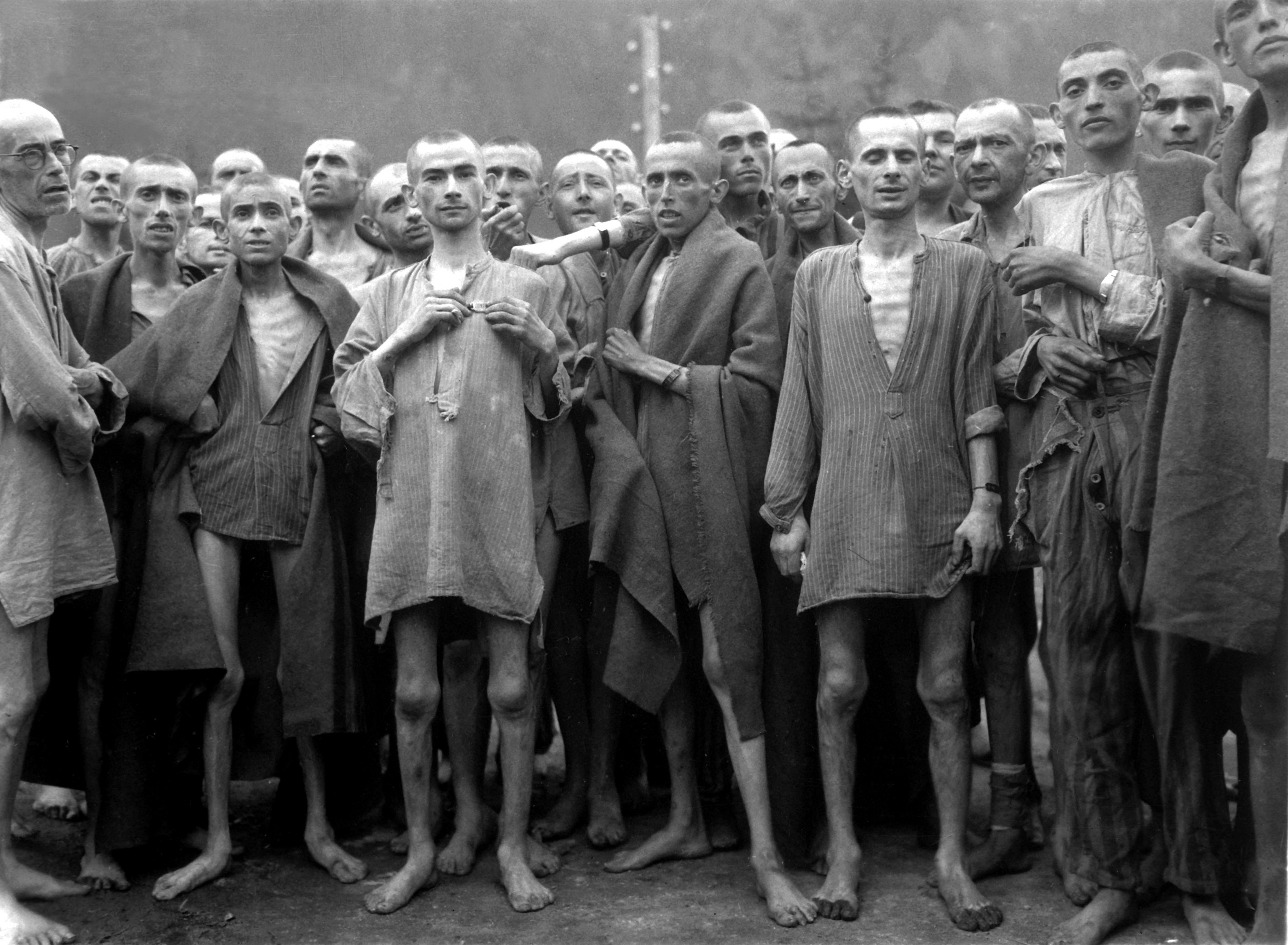
WAR & CONFLICT BOOKERA:  WORLD WAR II/WAR IN THE WEST/THE HOLOCAUSTViktor was a young psychiatrist in Vienna when Nazi Germany took control of Austria.  As Jews, he and his wife were both taken to concentration camps. The first half of his book is about how he survived the atrocities of that experience. The second half is his own approach to helping people which he called “logo therapy.” Logo in its original definition is not about brand symbols—logo is Greek for “meaning.” Logo therapy is literally “meaning” therapy.

Viktor’s big insight about meaning is very simple. He got through the concentration camp because he believed that he needed to survive to take care of his wife. He knew that his life mattered because he decided to do whatever it took to survive so he could care for and love her. No matter what. He wasn’t important. She was. So he could put up with anything. The worst things people could do to each other. He and other prisoners in the concentration camp also found meaning by giving to and caring for each other.

Viktor’s wife didn’t make it. He did, remarried and had one daughter. He wrote his book, and spent the rest of his life helping people apply his wisdom–all over our world.

Our lives have meaning because of what we can do for others, not because of what we do for ourselves. This is why one study after another shows that buying some new toy or gadget gives us a temporary emotional “high” that is quickly gone. Doing for ourselves produces only a brief moment of joy and meaning. Doing for others? We know we made a difference and feel great inside. And we remember the feeling.

It is better to give than to receive” is often quoted but perhaps we don’t fully appreciate the truth in those words. In many ways the giver actually gets more than the receiver–because the giver has validated that their life matters and has meaning. Christmas (and all similar holidays) are likely such a wonderful time of year for so many people because we feel so great about giving to others. It is those who have no one to give to who feel sad and depressed during the holidays.

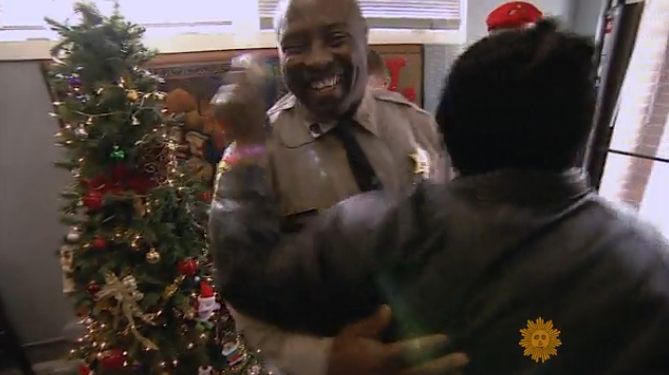
police-give-away-secret-santa-money-Recently, a “Secret Santa” in Kansas City used his wealth to create meaning, change relationships and build trust between police officers and people in need in the community they serve by giving. He gave a large group of police officers $1,000 each to give to those they saw in need, $100 at a time (letting each officer give to ten different people).  The reaction of drivers of beat-up older cars after being pulled over and receiving some much-needed cash instead of a traffic ticket was priceless. Instead of being seen as the bearer of bad tidings, the police officer was seen as a caring person, there to provide help. The whole relationship between law enforcement and the people involved was redefined in an instant. Instead of preparing to argue over their driving, people opened their arms to share a hug. These acts of giving created meaning for the police officers, the people they helped and, of course, the “Secret Santa” himself. You can learn more about it here:

http://www.cbsnews.com/news/sheriffs-deputies-kindness-brings-drivers-to-tears/

Meaning comes from giving to others. Helping them. Making a difference in their lives. Of course, the biggest meaning comes from choosing to make one person your special partner in life. A lifetime of meaning and giving is a lasting source of happiness, if it is built on the right foundation.

To achieve meaning for your team (the most important want of all)–give and lead them to give too. Give thanks. Give a helping hand. Give your knowledge. Give a smile. Find a cause worth giving to as a team and then do it. For when we give, we create meaning.  When we know and feel what we are doing truly means something, we will do all we can to make it happen. Because now, we care.

Image Sources: Wikipedia, CBS