Ode to Diet Coke (a parody of Keats’ Ode On A Grecian Urn)

Wrote this a few years ago in response to a throw-down challenge from my friend Rachel, hope it brings you a smile!

Thou shimmering sheath sealing sweetness light,
Thou offspring of Atlantis’ molten sand,
Silver pillar, your tattooed words recite
A sparklin’ story condensed in one hand:
What joy awaits beneath your shining skin
Of candy sweet or acid’s sting, or of both
In Isles of Wal-Mart or Fountain spring thee
What words and marks are these? Which cal’ries loathe?
What struggle to escape thee lappet’s tin?
What scarlet and ebon runes? What glory?

Tasted libations are sweet, but those still seal’d
Breed lust, therefore, ye ringed tab, stay on;
Not yet to the tongue, will thee be revealed,
No slake, the elixir shan’t be withdrawn:
Fair vessel in my hand, thou must await
Thy nectar shall soon dance upon my lips;
Bold lover, ever, ever shall we kiss
Though I shall imbibe thee, such be your fate;
Ye will fade, yet thee brethren shall bring me bliss,
For ever wilt thou froth in hearty sips

Ah, captured effervescence! Sealed inside
Your foaming waves, yearning to find freedom;
And pound my palate’s shore with umber tide,
For ever waiting with rapture to come;
More flavor! More Fizzle! More Ecstasy!
For ever chilled and ready to thrill,
For ever exploding with your sweet bite;
Tempting and taunting me, so near ye be,
Restrain me at thy precipice, need thee still,
Parch’d my tongue be, Succumb ye must this night.

Pillar doth lean, exposing crown eclipse,
Thy clasp be ripped, thy soul revealing,
Your glistening shaft rising to my lips,
Mahogany nectar streaming…
How your roiling essence doth flow and froth!
Caressing cheeks and tongue and then
Erupting and overwhelming ev’ry sense!
Little vessel, baring essence thee doth
Thunder round and around my mouth again!
Piquant treacle, thy depth be e’er immense.

O Column Chrome! Sweet Nectar! Sate my soul!
From cane and coca and citric be wrought,
With nary a cal’rie my waist to roll;
Thine elixir, dost please me with just thy thought
Spring eternal, flow thee to short and tall!
When menology for thee time be pass’d,
Thy sisters shalt be birth’d and ever give
Surfeit nectar never, to all thou say’st,
Just for the taste of it”—great taste is all
Ye need in life and all ye need to live.

Dancing With Integrity

Words both describe and create our understanding of our world, other people, ourselves—of our experience of life itself. There’s a word we bandy around a lot . . . Integrity. We generally use it to describe behavior that is moral and ethical by our social standards. There’s a deeper, more profound meaning to Integrity that I think our society and each of us (myself included) can apply to great value in living better, more meaningful lives-together and individually.

The root word of Integrity is from the Latin ‘Integer’: to be One, whole, and complete. In that deeper definition both Mother Teresa and Adolf Hitler had huge integrity.  Their behavior and conduct were extremely consistent with their beliefs, values and inner selves.  Of course, from a moral perspective that’s a different story altogether.

Some of us don’t let our full, true, authentic selves show to others because we see risks in that, think it won’t get us what we want, or don’t even know who we are. That’s living without the personal integrity of walking our talk—from our “inside our heart and head talk” to our real-world actions and behavior.  We put on masks (not the Covid-protecting type) to get something we think we want, be accepted, get power, love, money, or likes on social media.  Maybe our “mask” is a piece of our true self—maybe it’s completely fake. Either way, putting on a mask is a missed opportunity to grow, share, and connect with others by being our true, whole and best selves.

In U.S. society, not wearing some form of mask is pretty complicated at times because we have very situational definitions of socially appropriate behavior. Being our same true and complete selves at a religious service, workplace and nightclub might be more than a bit problematic! Even in those very different environments, we can be our true and complete self that is appropriate for the situation.  That’s not lacking in Integrity by being untrue or fake.

At times in my life, I’ve not been my true, complete self—because I thought it would get me something I wanted. There’s a fundamental problem with that. If I’m not my full authentic self, then the basis of whatever I might achieve is built on a weak foundation of half-truths. Or no foundation at all. When I’ve failed to live with Integrity, that lack of foundation has always led to problems later.

Even sadder, some of us keep our true self hidden from our own selves and miss out on being, growing, and sharing our best self. Because we don’t even know and accept ourselves.  That lack of self-knowing and acceptance almost always comes from feelings of insecurity or inferiority—and leads to behavior which is hugely destructive to ourselves and others.  People act out to feed their need for acceptance or power so they feel valued and there’s never, ever enough. Worse, the premise is simply not true. Every person has some unique great talents. And some things which he or she doesn’t do as well. Our diversity of capabilities is what let us accomplish amazing things when we work together.

One of the strongest predictors of personal and leadership effectiveness is self-awareness. Once we know and accept who we are—in all of our individual glorious strengths, weaknesses and, yes, quirky idiosyncrasies, then we can apply and grow those to better and better effect. That’s the first key step to personal integrity—knowing, understanding and being our true authentic self—with ourselves and everyone else.  Isn’t anything else fundamentally a deceit?

I have a mask collection I’ve been adding to for over 30 years. Thankfully, it continues to grow with gifts from family and friends. There are masks from every continent (except Antarctica) and they represent the delightful diversity of expression across humanity.  At a deeper level, it’s a poetic way of saying to all who I welcome to my home—wear no mask! Please be your true self and let me know you with integrity—and I’ll do the same. Imagine how much better we’d get along, understand, connect, and create together if we all lived with personal integrity from the inside out and let our true spirits show in all that we do?  There can’t be a fake connection when it’s built on truth with integrity. (Now we all understand that there are a few bad actors whose true selves are a bit scary. Wouldn’t it be better if we got to see that sooner too?).

A bit of research reveals that ‘Integrity’ is a Late Middle English word from the French intégrité and Latin ‘integritas.’  ‘Integer’, the root of those two words, is Latin for intact, complete and whole as described above. Here’s where things get even more interesting. ‘Integer’ is a combination of two Latin words ‘In’ (as prefix for negative, being without) and ‘tangere’ which means ‘to touch’.  When we delve into the root meaning of Integrity, it is being untouched—true, authentic and complete without manipulation. Nothing fake. With ourselves and with others. For a smile, ‘tangere’ comes from ‘tango’-Latin for touch.  In the last few centuries, tango has added some new meanings, including that spectacular way of dancing .

What if we all danced through life as our whole, best selves all the time? Now that would be truly living with Integrity.

Shall we dance? On a bright cloud of music shall we fly?

If it’s not broken, Don’t Stop – Make It Better!


How many times have you heard the phrase- “If it’s not broken, don’t fix it?” Seems to me that following that concept leads to the kind of complacency that results in big problems for a business, including irrelevancy and business “death.”  How is it that what would appear to be capable business people would let words like that come out of their mouths—or live in their minds?

About a year ago, I was meeting with a very successful home builder, with many billions of revenue, thousands of employees and a record of developing profitable residential subdivisions for at least two decades.  The business managed its real estate acquisition process differently than its competitors and did a few other things in unique ways that the company’s leadership thought gave them a sustained competitive advantage.  Leadership told me (and many others) that they loved their “system” and built their culture and processes to execute their system—and not change a thing. In fact, they purposefully avoided hiring people they saw as change agents to avoid disrupting their system.  It had worked for decades—why risk messing up the proven money machine with something unknown?

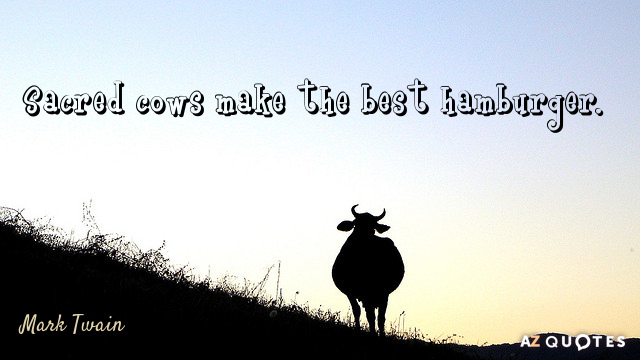
Quotation-Mark-Twain-Sacred-cows-make-the-best-hamburger-58-19-23

The challenge for that home builder is that someone (likely many more than just one) is already thinking about how to disrupt their model and take away as many customers as they can–maybe all of them. They are working on finding ways that will let them develop new homes faster, better and at a lower cost. Maybe it’s a competitor. Maybe it’s a totally new idea to meet the same customer need.
Imagine how buggy manufacturers were thinking before the automobile was developed—or more recently, how did Kodak respond when digital cameras destroyed the demand for their product? Unbelievable but true–a Kodak employee invented the first digital camera. blackberrykodachromeHow about Blackberry, which continued to believe that the security of their proprietary system would protect them from the onslaught of iPhones and Androids?  We all know how that worked out.

If we aren’t learning, growing and innovating EVERY DAY, we are on our way to dying—and that applies to individuals and organizations.  But individuals and organizations get complacent, like the home builder above, because there isn’t any threat or pain today—or maybe even anywhere on the horizon.  That threat to our survival might appear in six months—or twenty years. But it WILL happen—that’s one of the fundamental drivers of civilization—some of us find better ways of doing things—and don’t stop finding even better ways tomorrow.   If those people stop improving, some other innovator, “rule”-breaking, game-changing people come along to do the job.  If that weren’t true, we’d all still be hunter-gatherers living in caves with an average life span of 35 years.

So we can “sit back and coast” until it is too late and then react—or stay hungry and get better before someone takes our lunch away from us. For individuals, being an innovator might be baked into our personality and talents—but organizations can certainly CHOOSE between complacency and the mix of ingredients that leads to getting better every day. What does it take to do that?

The Right People: starting at the top, the right mix of people is key. That begins with leadership that is never satisfied that today is good enough. Certainly, it’s good to celebrate great results and progress . . . and then—onward to the next step up.  Boards and CEOs can help prevent complacency by selecting leaders who are always hungry to get better AND who know how to build an organization that does exactly that.  Next: make sure that your selection criteria and assessment processes include purposefully selecting-in people who are curious, hungry, game-changers especially in key functions like R&D, strategic planning, and all “big” leadership roles.  Not everyone needs to be an innovator—but purposefully embedding them into the talent mix is key.  Developing emerging talent that shows innovative capability is another key step.

A Culture that Fertilizes Innovation: Build a culture that celebrates effective change, continuous improvement and letting go of even the most treasured current ways of doing business to do something better.  Communication, recognition, leadership behavior, discipline, incentives, processes, policies, metrics, structure, even facility design and colors help build (and change) culture.  Headline—after getting the right people, putting them into a culture which nurtures innovation and improvement is essential—otherwise the greatest talent will only partially fulfill the potential they have inside.  Or even worse, simply walk away.

Processes that Build Improvement In:  Developing and executing processes that encourage innovation builds getting better every day into the rhythm of the business. That can be done by building environmental scanning, benchmarking (especially outside your industry), ideational sessions and decision criteria into your businesses planning and development processes.  By doing so, innovating becomes part of the rhythm of your business.

Metrics That Focus: Measure what you treasure—if you care about getting better, put metrics in place. Measure the number of innovations, their effectiveness with stakeholders (expected vs actual impact, ROI, etc.), benchmark them over time against yourself—and your competition. If getting better is measured and reported every year and quarter, you can bet your people will pay attention to it.

Organized Accountability: put accountability into place by clearly assigning responsibility for getting better in your organizational structure, job designs and performance goals. That includes the planning and R&D teams—and a lot more (e.g., product developers/designers, merchants, IT, supply chain, etc.). Drill that accountability down to specific jobs with goals that demand improvement and innovation to achieve (time to use those metrics).

Disciplined Investment: Getting better means trying new things—which means investing to develop and test the ideas. Putting decision criteria and standards at the key steps of your improvement processes is essential—so you invest wisely.  But if you don’t put some money into it, it will just be an idea.

The combination of the “soft” enablers of talent and culture with the “hard” drivers of process, accountability, metrics and investment will produce a continuous stream of proven innovation that keeps your business getting better every day.

If you’re not getting better, you are falling behind. We are either growing or dying. There is no plateau. The only question is which path you will choose–for yourself and for your team.  If you have any doubt, just ask the folks who used to be at Kodak and Blackberry what they wish they had done.  If it isn’t broken . . . Make It Better!

3 Little Words that build BIG Teamwork—and 3 that destroy it!

Have you noticed how nearly everyone frames their interpretation of a situation with words that reinforce and validate their point of view?  If you want an extreme example, watch MSNBC cover a story on a topic they are supportive of and then watch Fox News cover the same story—with the same relevant information available to both reporters (minimum wage increases would be a great example). The use of language to frame and support a point of view is striking—making the speakers’ perspective come across as it-is-so-obvious-it-must-be right to the listener.

I’ve watched the same behavior happen in teams—or what should be teams.  It would seem completely rational and desirable that everyone inside a business would think of themselves as “on the same team”—after all, if an organization is fighting within itself, it’s wasting energy that could be used to improve. Too often, that’s not the way it works. Instead, one function or another in the company blames the other, passively denies needed information and even actively sabotages another function—thinking somehow that this is the right thing to do—“we’ll show them!” kind of thinking.

I was leading the HR/People function in a business in which the Chief Marketing Officer and Chief Operating Officer were actively “at war” with each other.  The Marketing team was essentially responsible for defining our product and services and Operations delivered them. It was impossible for the business to fully perform without those groups working together. But these two leaders weren’t talking much to each other.  At least one of them would send “emissaries” with bad news/problems to the other—sometimes when it was too late to do much about it except get really, really frustrated.  Joint planning and problem solving sessions were almost never held between the teams.  One of them even decided to hold a separate holiday party and not participate in a company-wide event so their teams wouldn’t socialize!

Who paid the price? Customers in the form of poor execution by the business. Investors in missed opportunities for both revenue and lower costs/higher margins. And their people—who couldn’t truly do their jobs, learn and grow without working more closely as one team.

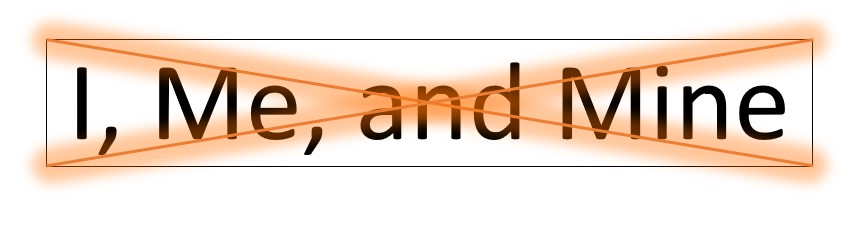
What drove all that bad behavior? Three words that don’t help when everyone is supposed to be on the same team: I, Me, and Mine.

I Me Mine

In that case, I, Me and Mine, were the people inside the teams led by two C-level leaders.  The “us” was “my” people and the “them” was the other leader’s people in the same business.  Problem—the real team was the ENTIRE business. No function took care of a customer, generated revenue or produced earnings by itself. That ONLY happened when the whole team, everyone in the business, worked together.

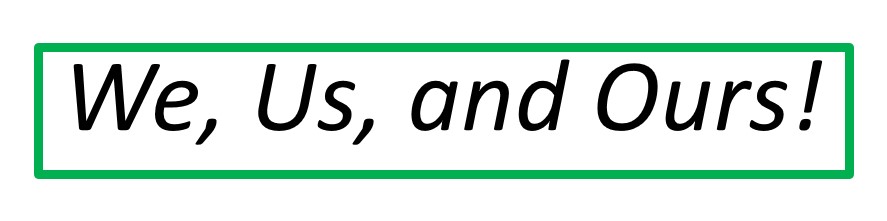
What are the three powerful words that were missing from these two leaders every day conversations?  WE, US, and OURS.  Those three words weren’t heard much at all—unless they were being used in the “royal” sense to really refer to “mine”.

We Us Ours

I met with each leader and shared what I’d heard from their own people—and how frustrated their people were with “the war” between them. No finger pointing or blame—simply shining a bright light on something they both knew was true—but were ignoring by letting it stay in the shadows.  Both of the senior leaders acknowledged it was going on. I asked each of them individually: Do you think the way we working today is effective?  Who is the WE in our business—who exactly is on OUR team? Is the current state helping or hurting OUR business? What should WE do about it?

When the bright light came on, each leader owned their personal contribution to the problem—and both said they wanted to change.  I didn’t have to ask them to change—it was apparent as soon as it came out in the open.  The three of us met together to talk about the issues and clear the air—not with finger pointing—but with personal accountability.  Together, we defined expected behaviors and committed to them, including what WE needed and would give each other.  Then WE built some new cross-functional teams and processes and put them in place—along with shared ownership of key metrics that everyone influenced.

What happened? Just what you’d expect—better teamwork, improved execution to our customers, and a foundation of trust and communication for bigger changes to come.  All of that started with recognizing that those three words—WE, US and OURS—included EVERYONE in the business—and that the only “them” had to be our competitors who were trying to take our customers away from us.  The us and them inside our business was hurting us—and helping our competition.

That’s an example of the big power of WE, US and OURS and is true for every shared effort. The more we as leaders create a culture of WE, starting with our own behavior as the standard for all to see, the better our people will work together. That’s a key element in getting your competitors customers to leave THEM and bring their dollars to US!

If you have I, me and mine or their evil cousins, us and them, living inside your business—drive a stake through their hearts.  All groups of people work better when they work together.  That starts with the example leaders set and it shows up in the words they use every day.

People LOVE Change! (so why do we say they hate it?)

We’ve got this mantra in our society: “People hate change.” You hear it all the time don’t you? “We tried to implement this new system at our company and it totally bombed. People just hate change and fill-in-the blank just killed it.”  Everyone nods their heads knowingly . . . as if to acknowledge the irrefutable truth that people simply don’t like change.

Only one great big problem. It is a complete load of garbage. Or worse. People LOVE change! Don’t believe me? Let’s do a little exercise.

Change Heart croppedDo you use an MP3 player to listen to music (iPod or similar)? Or maybe you’ve moved on to the next generation channel—streaming music from Pandora or others?  That’s how most of us get our music today.  Do you remember when you used to put a cassette (or maybe your parents did) in your car to listen to music? Do you miss that cassette player today? Were you angry and frustrated when you moved to an iPod or streaming music from CD’s? How about movies? Would you rather go out and rent a VHS tape from Blockbuster (as if you could find one) or do you just love being able to instantly download a movie from Netflix?

I’m betting you love the quality, choice and convenience of the changes in how you access entertainment. How about transportation?  If you would like to go back to riding a horse instead of driving your 200+ horsepower car where you want to go in a fraction of the time (while listening to your favorite tunes in air conditioned comfort), please raise your hand now.  How about we go back to living in caves and reverse all the changes of the last 10,000 years. Any takers?

The issue with change isn’t change….it is how we go about making change happen.

Here is a pretend, but very realistic, example. Let’s say you worked for a company a few years ago that used CD’s for audio training. Every employee was issued a CD player and the CD’s to listen to the training. When they were done, they would take a paper and pencil test to confirm they’d learned all about the new “stuff.”   Now someone in the training department goes to a conference, learns about this uber-cool new technology using MP3 files carried on a small lightweight device with no breakable parts.  The trainer thinks—“Wow, I could deliver all my training more easily, update the content simply, stop buying CDs and tracking them and give my people all that in a smaller device that doesn’t break easily. I’m going to be a hero!!” In the traditional form of implementing change, the trainer buys a bunch of MP3 players (after building a business case and getting approval) and prepares to implement the new technology. Because the trainer knows communication is really important, he puts out a memo to everyone in the company who goes through the training. It probably looks something like this:

To: All Employees

From: Joe in Training

Subject: CD Players for Training

Effective next Monday, we are discontinuing the use of CD players for all training. We have identified a new technology to deliver audio training called an MP3 player. You may not have heard of it before, but it will reduce our training technology costs by 30% and, trust me, you will find it much easier to use.

As we will no longer be supporting the use of CD players for training, all employees are required to return their CD players to the training department by 5pm this coming Friday.  As these are company property, failure to return your CD player to the training department by the scheduled time may result in disciplinary action, up to and including termination.

Thank you and we appreciate your cooperation.

Joe

Wow. How are you feeling about that? Maybe like someone just ran over you with a truck? Like maybe you didn’t matter one-little-bit to Joe because he just pushed you around like you were a two year old about to put scissors into an electrical outlet?  Seriously….. This guy is going to tell me I might get fired because I don’t turn my CD player in by Friday?  Who made him King!! I’ll just show him a thing or two….. (Hmmm, maybe my CD player will get run over in the street? Or my kid will drop it in the toilet or . . . and the list goes on).

That’s the issue with what we describe as “people don’t like change.” People LOVE change—when they want what the change will bring—faster, easier, lower cost, better quality, etc. People HATE being PUSHED around.

And pushing is frequently the change management method of choice. What’s the natural response when someone pushes you? You push back.

How does pushing show up when change is implemented?

  • No “Why” we should implement the change defined or communicated
  • No participation in the process of considering change options
  • No opportunity to test the change to make sure it is better than the current solution
  • No input in the decision to make the change
  • No communication of “What’s in It For Me” (WIFM)
  • Not enough training on how to make the change work
  • No appreciation for your effort in making the change
  • LOTS of mandates, requirements and policies to adopt the change—or else.

Rational people push back when treated that way. Some actively (I’m not going to use the new system/tool/process) and some passively (I’m really, really sorry, but my daughter’s Golden Retriever ate the CD player).  Either way, we are left with a well-intentioned change that isn’t delivering the expected results.

What if we PULLED to implement change instead of pushing? Have you noticed that pulling often lets you move a lot more than when you push? When you pull someone with you and they choose to go to the same place you are going, their energy adds to your own. When you push, it’s always just you and you alone. By pulling, I mean adding every one’s energy together to make the change happen-because everyone wants the change.  Pull is about leading in ways that create shared desire for the new way of doing things.

What if Joe had used Pull instead of Push?

What if Joe had first found a small group of potential early adopters?  You know the type—respected by their coworkers, smart, great critical-thinking skills (no push-overs, pun intended).  Joe could have approached them and said:

“Hey, do you have a minute? I recently learned about this really cool new technology I think might be good for our audio training . . . but I’m not sure yet. It is about 1/10th of the CD player’s weight, has no moving parts, sounds crystal clear and can carry thousands of recordings. It’s really cool and brand new on the market.  I bought five of them just to check them out and I am hoping that you would try it out for me-and the company.  If it works, that’s great. Even better would be if you and the other four people trying it out find a bunch of ways to make it work even better for us—so it really fits our business.  Would you be willing to give it a shot? After you’ve tried it for a little bit, I’ll get us all together to get your feedback and figure out what, if anything, we do with it.  If it doesn’t work, we will have learned a valuable lesson—thanks to you. Oh… and one other thing, if we do decide to use it in some way, I’m hoping you will help others learn about it and why it is better for us. But only if it is better than the CD players we are using today. Are you game?”

What did Joe just do? He asked a group of smart, respected influencers to help him figure out if his change was good to do. Then he asked them to make it even better. To top it off, he asked them to help generate buy-in and enthusiasm with the rest of the team—but only if they believed in it.  If it were a religion, Joe would have just started recruiting a bunch of apostles.

In a pull approach to change, Joe would then get their feedback, listen, make the change better (or kill the change it if it didn’t work). Then Joe would have told everyone about the test and asked his early adopters to be part of that process and spread the word.  Joe would even ask them to help him refine the training on how to use the MP3, so everyone knew how to use the device when they got it and didn’t get frustrated by the new tool. When it came time to introduce the new training devices more broadly, everyone would know why, have confidence the “new way” would be a big improvement over the old school way they were leaving in the dust and be lined up around the corner to get a hold of the new device!

All because the way Joe approached the change didn’t push on anyone. Instead, Joe used participation, listening, communication and training to pull his team to the change—he created a situation where people WANTED the change.  Sure, there will always be a few people who are so comfortable with the status quo that no matter what you do they won’t get enthusiastic about the change.  When you create a situation in which people have reasons to want the change, most of your team will ask “When do we start?” because they are excited about the future. Just like you were excited the first time you used an iPod to listen to a song you love or downloaded a great movie from Netflix.  You liked it didn’t you? That’s because you wanted it.

People Love Change Cropped

People love change. Most of us like the latest, greatest, new and improved.  People line up around the corner for the most innovative technology.  We remodel and upgrade our homes to make them “better.” We go on a vacation to a new place to learn and see more of our world. Many of us can’t wait to try out the cool new restaurant that opened up around the corner.

We don’t like being pushed around.

So don’t push. PULL. Approach every change in a way that builds shared ownership and enthusiasm for everyone who will be a part of your change. People will love it. When you lead with that kind of respect and care, they might kind of like you too. Most importantly, your change will get the results you expect—because your people will DO it.

There is a very bad joke about change that captures all of this simply and perfectly. Are you ready?

Question: How many psychologists does it take to change a light bulb?

Answer: Only one. But the light bulb has to really want to change.

Make Your Vision Mouth-Watering

Vision.  Sometimes, the idea of a personal or business vision can come across as a mushy, touchy-feely, feel good idea. George H.W. Bush was famous (or infamous) for referring to it as “the vision thing.”

It isn’t supposed to be that way. A compelling vision is one the most powerful ways of creating high levels of engagement (desire, commitment, etc.) for individuals and teams—because an effective vision is literally a picture of what you want.  When a team is truly committed to a clear picture of what they want to achieve together, they have a real shot at making it happen. If the team doesn’t have a clear vision of where they are going, there’s a good chance that’s where they will end up–nowhere.

A few years ago, I was a member of a leadership team that crafted a new vision for a large service business with over 70,000 employees across North America. The business had been struggling financially and was ranked dead last by its customers relative to all its major competitors for its products and services.  Workforce engagement was low and turnover was high–almost the highest turnover in its industry. Many of my peers on the executive team had turned over too. Bottom line: neither our customers or employees had much loyalty to our business.

Our new vision was specific, descriptive, colorful and full of heart—with defined metrics. It was also based on rigorous customer insight and analytics. We were confident that if our people understood and worked together to make our vision real, our customers would love what we were doing for them and goodness in many forms, including financial, would follow.  So we set about sharing our vision with every single one of our people and every new hire. We made sure that every person on our team learned about our vision and how they could help make it real in a face-to-face conversation with a trusted person who had “drank the kool-aid” and was well-trained on how to authentically share it with others.

What happened? Within 30 days of sharing our vision with tens of thousands of team members, our customer loyalty measure moved up dramatically. There were no other changes in product, pricing or process. Simply and powerfully, enough of our people bought into our vision to make a big difference in how they worked together to execute to our customers. And our customers noticed it immediately. Guess what the customers did as a result? Came back more often and spent more money at our business. Over the next several years, the business stayed focused on making our vision real – building it into the design and execution of our processes, products, culture and more.  Customer loyalty went from dead last to the top quartile of our competitors. Employee turnover at all levels was cut in half. Financial results?  Our profits increased by more than 300%.

If you think vision is some soft, touch-feely thing, ask the millions of customers, employees and investors who all got better products, jobs and financial returns from executing that vision. There are many, many other examples and I’m sure you have several in your own life.  History is full of them– if you haven’t heard Martin Luther King’s “I Have A Dream” speech, it is a terrific example of the power of a compelling vision to make a huge positive impact.

See It Then Make It Real

Would you do a little exercise with me? It won’t hurt. In fact, it will taste great in a virtual sense (and in the real world too, if you do it).  Here we go:

  • What is your favorite food? By that I mean something from a specific country or type of food. For example, French, Italian, Sushi, Indian and so on. I love so many it’s hard to pick. For today, my choice will be Thai—and I will come back to that later.
  • In your mind’s eye, take a minute and envision that food with all of your senses. See it on a plate, beautifully presented to you and ready to eat. Smell the different herbs and aromas as you inhale them. Feel the first bite as you taste the delicious flavors and textures.
  • If you were to go for the absolute very best in the world dining experience in a restaurant for this, your favorite cuisine, where would you be? Be specific—identify the country, city or place, and type of restaurant.
  • Now, close your eyes (after reading this item of course). See yourself in that place—see where you are sitting, who you are with (you’ve got to bring a great friend with you!), the sights, sounds and smells around you. What music do you hear playing?  Imagine the aromas, taste, texture of your favorite foods (and a drink to go along with them) as you dine in the most authentic, real place in the world for your choice with a treasured friend.

You have just created a vision. It is very specific and tangible in your mind’s eye isn’t it?  Right about now, your mouth ought to be watering like the fountains at the Bellagio in Las Vegas at the amazing prospect of this experience!

What if you’d stepped out of your front door one day and thought to yourself “Hmmm, I’m hungry” and gone to the nearest place for food?  You could have easily ended up at a grocery store or a fast food place, got some “fuel” for your body and moved on to the next thing to do. While it would have met your physical needs at the moment, there is nothing memorable about that.  Compare that experience to the vision you just created—vastly different outcomes, right?

Thai Restaurant 3For my favorite food dining experience, I imagined a place on the banks of a river in Northern Thailand—somewhere near Chiang Mai or Chiang Rai. It might look something like the picture to the right. In my vision, I traveled there with a great friend, arrived as the sun was setting and twilight turned to starlight as we shared a variety of freshly prepared Thai dishes. The spices and flavors went Ka-Pow!! in our mouths with every bite from the curry, noodles, peppers and sauces.  Panang Gai would likely be one of the dishes: red curry paste fried with chicken in a coconut cream with chopped kaffir lime leaves on top.  Some of the items were really hot, which was a great excuse for a taste of ice-cold local Singha beer before trying the next dish.  Two musicians playing Thai music added to the moment; we didn’t understand the words and that didn’t matter because we got the feeling. The moon glistened over the river as we ate dessert—fried bananas with coconut ice cream in a rum butter sauce. It was magical.  Who wants to go?!

Japanese Vision Proverb
Once you have your vision, you can begin planning and executing to make it real. For your food vision, that means passport, flights, hotel, friend(s) to join in, reservations, packing, budgeting and more. Because a vision doesn’t matter until you DO it.  Until then, it is just a dream.  Now it is time to build your plan and make it happen.  Make sure your plan is specific on what is to be done, who is going to do it, and when the actions and results are to be completed.  Otherwise, you are still daydreaming.

Measure What You Treasure

One of the key ingredients in making your vision more than a dream are metrics to track your progress from vision to reality. Metrics create accountability, anticipation, course corrections when needed, and confidence as you get closer to making your vision real.  The right metrics need to be defined based upon your unique vision. You are not going just anywhere, are you? So you need to have specific metrics that are perfect for measuring progress to your destination. Just like GPS coordinates tell you when you’ve arrived at the intended spot on your map and let you know you are getting closer every step of the way.

If you don’t have a vision and metrics to track your progress, what happens the next time you get hungry? You will likely end up accepting whatever you have in the fridge, or running out to get “something quick” from the grocery store or other “fuel source.”  Without metrics you could easily get lost along the way, even if you’ve decided where you want to go.

Compare that experience to the magic that can happen if you dream big, get clear on what you want to achieve, figure out how to measure your progress and get some other people to help you make it real.  Which path will you choose: a clear, compelling vision or whatever you happen to come across that is convenient?  What do you want for yourself? For your team? For your business?

Before you begin your journey, decide where you are going (vision) and figure out a way to track your progress there so you stay on course (metrics).  Otherwise, you could end up going somewhere truly mediocre—or go nowhere at all. Don’t just step outside your front door and take the path of convenience–go somewhere great on purpose.

Vision—it’s the beginning of making Want happen.  Where do you Want to go?

Are you hungry now? Bet you know what to do about it.


100% Organic, Natural, Authentic Kool-Aid: The Secret Ingredient

What exactly is performance? Is performance getting something done? Is it doing something better today than you did yesterday? Is performance doing something better than anyone else? Perhaps performance is getting the most out of what you’ve got? Performance is all those definitions and more.

Performance is creating something better than what we started with.  We start with wherever we are and whatever we have at the beginning. Let’s call our starting point our Base. Then we do something to make that better, in other words we add Change. The Base plus what we Change gives us our Results. Change is the difference between what we started with (Base) and what we ended with (Results). In other words:

Results Formula

Today, let’s look at performance from the “Want” or commitment perspective. The intensity of desire an individual or team has to achieve a result has a huge multiplying effect on the results they produce. When someone really and truly wants to make something happen, it shows up in persistence, resilience, focus and alignment.  One compelling way to look at how much an individual or team wants to do something is to measure how much the performers give for what they get. Essentially, that’s a Return on Investment (ROI) definition of performance commitment: the more a performer gives in focused, purposeful effort for what it takes to create that commitment, the greater the return.  Think about times in your life when you deeply and truly wanted to make something happen. You willingly moved mountains to make it so, didn’t you?

Often it takes very little in financial investment to create a deep and powerful “Want.” Most of the time when people intensely commit to achieving a result, that desire occurs because they have decided that the result truly means something to them.  Want is most often driven by powerful emotions—pride, love, feeling good about yourself, doing something that creates meaning in your life.  The more powerfully these emotions are engaged, the greater the commitment to the result—and the greater the “return” in the performance people give for what they get.

Let’s apply this idea to the performance of teams. Here is a one question quiz for you: Using the above definition, What is the highest performing team in the United States of America?

By team I mean any group of people-business, non-profits, sports, etc. In other words—what group of people gives the most for the least? From my perspective, that’s the definition of a high performance team because that team has the greatest difference between what they start with (Base) and what they give (Results).

Take a minute and think about it.  I’ll share my answer below.

Do you have your answer? Here’s mine.

Q) What is the most you can give?

A): Your life. There is no greater give.

Q) Who offers to risk their lives?

A) Lots of dedicated, committed people—police, fire fighters, military, health care professionals and more.

Q) Who is most at risk of losing their lives?

A) The Armed Services. They can be at war where people are intentionally trying to kill them. From a “Base” perspective, they also don’t get paid a lot to put their lives at risk. So there is a lot of performance “give” from the Base to the Result.

Q) Which branch of the Armed Services is most likely to be at risk?

A). There is one branch the United States turns to time and time again when there is a risk to our safety and security. They are nearly always the first to enter a conflict wherever it may be—truly “the first to fight.” They also guard every U.S. Embassy around the world.  There motto in English is “Always Faithful.”  And they are—to their country and to each other.

My answer to the highest performing team in the United States question is (scroll down for answer):


marines few proud cropped

Think about it– there are many high performing teams in every society. Great sports teams, corporations which consistently excel (Costco, Apple, etc.), non-profits who create great value through their performance and do wonderful things for people in need.  Is there another team that gives more for less than the United States Marine Corps?

The United States Marine Corps offers up their very lives in support of their mission and each other.  The Marines are nearly always the first to enter a dangerous situation and they do so with consistent effectiveness. There is nothing greater that a person can give than risk life and limb—and the financial cost (Base) of doing so isn’t very much relative to what the Marines risk and the results they achieve. No one becomes a Marine to get wealthy.

So why do men and women become Marines, putting their lives in potentially great risk to serve their country, execute their mission and help each other?

Kool-Aid.

100% Organic, Natural, Authentic Kool-Aid.

Sometimes you’ll hear a cynic wisecrack “Watch out, he really drank the Kool-Aid”—as if that were a horribly stupid thing to do.  When the Kool-Aid is real, authentic and based on good values, there is nothing better in the world to drink. It is at the foundation of every great team in every society. The cynics have it so wrong.

If you don’t know, the expression “drinking the Kool-Aid” developed as a result of a senseless tragedy in Jonestown, Guyana in 1978. Hundreds of members of a religious commune intentionally drank a flavored drink laced with cyanide at the direction of their leader and died. The victims bought into an incredibly destructive set of beliefs and acted on those beliefs. It wasn’t actually Kool-Aid, but that became the brief description for blindly following bad beliefs and values to a tragic end.

That doesn’t mean all “Kool-Aid” is bad. It simply means bad Kool-Aid is bad. There is good, and even great Kool-Aid, by which I mean a set of beliefs, principles, values and behaviors which guide a group of people in how they perform.  Every great human organization is based on its own “Kool-Aid” and uses that to bring new members into the team and guide them in how they will act within the team.

Every nation has its own “Kool-Aid” in the form of pledges, anthems, flags, declarations, constitutions and more. Religions distribute their “Kool-Aid” through the stories in their texts. The Bible, Torah, Quran, Vedas, Homeric Hymns, the Vesta and every culture all teach beliefs, values and behaviors through stories. In the U.S., the Declaration of Independence, Pledge of Allegiance and the story of George Washington admitting to his father that he chopped down the cherry tree because he could not tell a lie are all ways in which we teach and reinforce our national “Kool-Aid.”

The U.S. Marine Corps has some of the most powerful Kool-Aid in the world: you don’t “join” the Marines, you become a Marine. Through the recruiting process and most critically through what the general public thinks of as “Basic Training” new recruits are transformed from individuals to members of an extraordinarily committed team who share these three values:

Honor     Courage     Commitment

In 12 weeks of training, new recruits learn the values, stories, expectations and behaviors of a Marine.  Yes, most certainly their bodies are conditioned. More critically, their minds, beliefs and behaviors are developed in alignment with the Marine Corps mission and values. Everything they do and experience during those twelve weeks is designed to shape them into a cohesive team with a shared set of beliefs, purpose and performance expectations.  And it works—the evidence is plain to see.
Disney Traditions

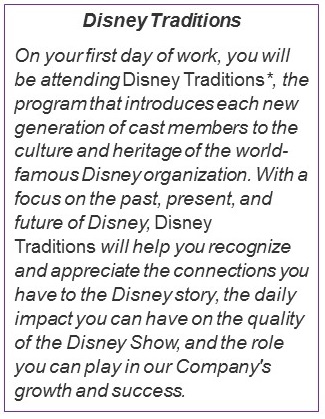
In the business world, the Basic Training used in the Marines and other Armed Forces is commonly referred to as “onboarding” or “orientation.”  High performing businesses take it very seriously. Just like the Marine Corps, they design and deliver an experience to every “recruit” that does the same thing. For decades, Disney’s theme park business has put every new “cast member” through their Disney Traditions program starting on day one. It pays off in the performance of every cast member day after day as they serve guests in their theme parks around the world.

Here is a real example of “Marine Values” in action in the business world—long after the individual involved had left active duty.  “Customer Service, Inc.” is a real multiple brand service business with over 100,000 front-line employees directly serving customers in thousands of locations across North America and billions of dollars in revenue every year. “Customer Service, Inc.” brought in a high-powered and highly-regarded Executive Compensation Consultant to take a look at the company’s compensation practices– salaries, incentives, benefits, perquisites, etc. After looking at the company’s compensation plans, what competitors did and conducting a number of interviews, the Compensation Consultant met with the CEO to share his recommendations. He told the CEO that he found that there were lots of extra perquisites (cars, corporate jets, and other privileges) for executives. The Compensation Consultant recommended that the perqs and benefits that weren’t based on performance be reduced and that compensation be focused simply and powerfully on rewards for good short and long-term results.

The CEO listened and then told the consultant that he had learned about leadership when he attended the Air Force Academy in Colorado Springs.  The CEO said: “In the Air Force, the people on the ground take care of the people in the jets. The pilots are the ones in charge and that’s the way I think we ought to treat our execs.”

The Compensation Consultant replied: “I understand. You know, I was in the Marines and that’s where I learned about leadership. In the Marines, the officers get in the trenches with their troops. They make sure their team eats first and they lead the charge with their men when the battle begins.  Your tens of thousands of employees are just like that and your business will perform better if your execs are in the trenches with your people, not up in the air.”

The Consultant didn’t get that job. But he was absolutely right.  He learned those beliefs in the Marine Corps and they continued to influence his advice to the wealthiest and most powerful CEOs and Boards in America.  The Marine Corps gave him their “Kool-Aid” to drink over and over again during his time in the service and it continued to shape his thinking, beliefs and behavior for the rest of his life. That is some pretty good and powerful stuff to drink from my perspective.  How much more effectively would your team perform if everyone on the team was fully committed to the same great beliefs, principles and values?

Want— the desire to perform— is at the foundation of performance.  Great, good-for-you “Kool-Aid” is the rocket fuel that creates the desire to perform for every high-performing team, organization and group of people. Organic, 100% natural, authentic Kool-Aid based on great values, beliefs and principles which a good person can look at and say—“YES, I believe those are good things that I want to stand for too” is what propels every effective and lasting human organization to perform as an aligned team. It works for the U.S. Marine Corps.  Every country tries to do it (some more effectively than others). So does every religion.

Take a minute and reflect on the highest performing team you have been a part of in your life so far. Was there a clear purpose? A set of values/principles that guided your behavior? Tribal stories of great achievements in the past? Did everyone on the team want to live by them and make them real every day?

Semper Fi.


The Meaning of Giving

A couple of weeks ago a close friend asked me “What do you think is the meaning of life?” This holiday season, I’m sharing my response with all of you.

Having, creating and building meaning is likely the deepest “want” most of us have. We want to know that our time here, together, truly means something. For leaders of all teams, creating meaning is the key driver of engagement and commitment because when we know what we are doing means something important to us, we want to do whatever it may be better, faster and smarter.

I believe most people already know the answer to the question my friend asked me, though many people get confused and misled by more superficial things. Here is my reply to my friend:

A few years ago, the VP of Marketing for my business (a large global company with many billions of dollars in sales) was in my office around 7pm. We’d been talking about a number of business issues and were getting ready to wind up our day, when I randomly asked him what he thought the meaning of life was. He was (and is) a very good man.

His answer was breathtaking for both its accuracy and its candor in a corporate setting:

Love.

I asked him if he had read Viktor Frankl’s book “Man’s Search for Meaning“–which a survey conducted for the Library of Congress ranked as one of the ten most influential books of the 20th Century. He had not, so I shared the essence of the book with him.

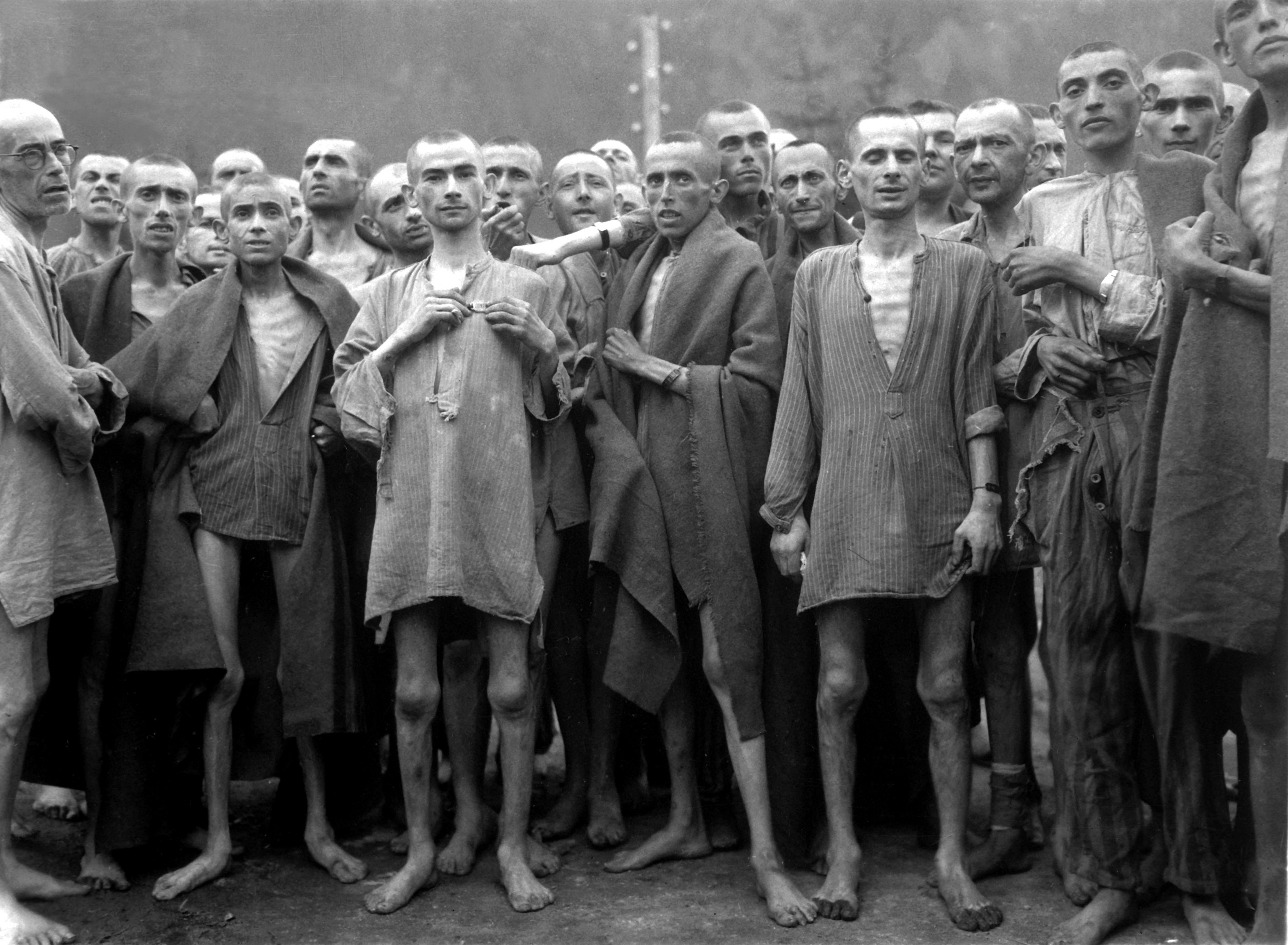
WAR & CONFLICT BOOKERA:  WORLD WAR II/WAR IN THE WEST/THE HOLOCAUSTViktor was a young psychiatrist in Vienna when Nazi Germany took control of Austria.  As Jews, he and his wife were both taken to concentration camps. The first half of his book is about how he survived the atrocities of that experience. The second half is his own approach to helping people which he called “logo therapy.” Logo in its original definition is not about brand symbols—logo is Greek for “meaning.” Logo therapy is literally “meaning” therapy.

Viktor’s big insight about meaning is very simple. He got through the concentration camp because he believed that he needed to survive to take care of his wife. He knew that his life mattered because he decided to do whatever it took to survive so he could care for and love her. No matter what. He wasn’t important. She was. So he could put up with anything. The worst things people could do to each other. He and other prisoners in the concentration camp also found meaning by giving to and caring for each other.

Viktor’s wife didn’t make it. He did, remarried and had one daughter. He wrote his book, and spent the rest of his life helping people apply his wisdom–all over our world.

Our lives have meaning because of what we can do for others, not because of what we do for ourselves. This is why one study after another shows that buying some new toy or gadget gives us a temporary emotional “high” that is quickly gone. Doing for ourselves produces only a brief moment of joy and meaning. Doing for others? We know we made a difference and feel great inside. And we remember the feeling.

It is better to give than to receive” is often quoted but perhaps we don’t fully appreciate the truth in those words. In many ways the giver actually gets more than the receiver–because the giver has validated that their life matters and has meaning. Christmas (and all similar holidays) are likely such a wonderful time of year for so many people because we feel so great about giving to others. It is those who have no one to give to who feel sad and depressed during the holidays.

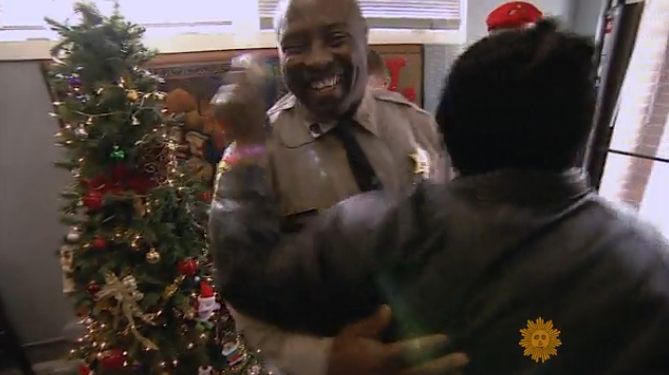
police-give-away-secret-santa-money-Recently, a “Secret Santa” in Kansas City used his wealth to create meaning, change relationships and build trust between police officers and people in need in the community they serve by giving. He gave a large group of police officers $1,000 each to give to those they saw in need, $100 at a time (letting each officer give to ten different people).  The reaction of drivers of beat-up older cars after being pulled over and receiving some much-needed cash instead of a traffic ticket was priceless. Instead of being seen as the bearer of bad tidings, the police officer was seen as a caring person, there to provide help. The whole relationship between law enforcement and the people involved was redefined in an instant. Instead of preparing to argue over their driving, people opened their arms to share a hug. These acts of giving created meaning for the police officers, the people they helped and, of course, the “Secret Santa” himself. You can learn more about it here:

http://www.cbsnews.com/news/sheriffs-deputies-kindness-brings-drivers-to-tears/

Meaning comes from giving to others. Helping them. Making a difference in their lives. Of course, the biggest meaning comes from choosing to make one person your special partner in life. A lifetime of meaning and giving is a lasting source of happiness, if it is built on the right foundation.

To achieve meaning for your team (the most important want of all)–give and lead them to give too. Give thanks. Give a helping hand. Give your knowledge. Give a smile. Find a cause worth giving to as a team and then do it. For when we give, we create meaning.  When we know and feel what we are doing truly means something, we will do all we can to make it happen. Because now, we care.

Image Sources: Wikipedia, CBS

Building Value: Can + Want x Do = Results

Can Want Do Chart

Can, Want, Do. The three core drivers of performance and achievement for individuals and teams. Today, let’s explore the combination of these three drivers as a whole a bit more fully before we get into the specifics of each and how we can simply and powerfully leverage them personally and for our teams.

These three combine to make results happen—and none of them by themselves is sufficient to do so. Can, Want and Do are not the proverbial three-legged stool of equals. They are a formula for delivering and improving results, once you know what you want to do.  Before Can Want and Do can work their magic, you must know what you want to accomplish– something that creates more value than what you began with. Can, Want and Do are no substitute for vision and purpose or, for a business, a business model that “works” by creating profit when executed.  Simply put: Can + Want x Do = ResultsFirst, you must define what you value and the measured results you will achieve.

Value

Can, Want and Do are the building blocks of growing value. Most of us first think of value in the financial sense of the term. How much more money do we have today than yesterday, last week, or the year before?—and how that money compares to others with whom we compete or compare ourselves. Growing $ value is certainly important– and essential for a business in order to survive, grow and continue doing things that create other forms of value. Growing financial value is one of many forms of creating value in the complete definition of the word. Value can include social good, survival, pride, personal growth, making a difference (more on meaning to come in future posts) and more. What brings value to you in your life?

Can, Want and Do are the ingredients that let us achieve whatever we have decided we value. By building, improving and measuring Can, Want and Do effectively, we significantly multiply the potential of creating whatever we choose to value—including financial growth.

CAN: Do I (and my team) have whatever it is we need to do what we would like to do?  Do we know how to do it? Are we good at doing it? Can we get better? Do we have the tools to do it? Supplies? Are we better at doing it than others? If not, it might be time to get better at doing it or let someone else do it and do what you are better at doing than anyone else.

Can is essential. If there is something we value that truly can’t be achieved, we need to redefine what we value and let go of that dream until a time comes when it is achievable.  (That’s rarely true but does apply to some goals. For example, traveling to another solar system with today’s technology). With a challenging and possible to achieve goal, figuring out what it takes to say Yes, we can! is an essential part of the formula.

WANT: Is this something We/I truly want to achieve? Do we intensely and passionately value it? Are we committed to it? Could we become more committed to it–so we do it even better, faster, more cost-effectively and with more value creation?  Can we grow our Want to an even greater and more powerful level? Does everyone on the team want the same result? If not…what are we going to do about that?

Without Want we can have all the Can in the universe—but very little Do will happen. To the degree Do does occur without much Want, it will be easy for someone else who has more Want to out-Do us, even if they have less Can. Because they will use the Can they have with greater energy and purpose—eventually building more Can as a result of their Want.

Want is in the middle of Can, Want, Do—because without Want, neither Can nor Do will create much value.

DO: Nothing matters until we Do it.  Before that, it’s just a dream. A possibility of what could be real. Of course, everything starts as a vision of what could occur. It is the aligned, purposeful and always improving execution of that vision, powered by Want and Can that makes it real. There are lots of tools to help us focus, align and measure our Do so we get better at our Doing every day.  Doing and doing better all the time is where Can and Want meet the road and make whatever we choose to value happen.

Did you notice the multiplier in Can + Want x Do = Results? Doing multiplies the commitment in Want and the ability in Can into actual, real world value. Without Do, Can + Want = 0.

Future posts will explore Can, Want and Do as distinct concepts.  I’m hoping this will become a conversation among us. So bring on your ideas, reactions, debates and build-ons!  I will certainly share insights and examples on what I have learned from those who taught me—and hope that you will share your insights and experiences too.

My next post will explore the deepest, most important Want of all.

The Three Essentials of Performance or Yes, We Can (if we want to)

Words.  Do they matter? A few sound waves. Some symbols on a page—today they are gone with the touch of a delete key or swipe of your finger. Yet, we all know that “the pen is mightier than the sword,” right?

Indeed, without the words, there would BE no sword. For words let one sword maker pass knowledge and skills onto the next, who further refined his craft and passed that knowledge onto the next and so on.  Without words, swords would never have been developed or refined. It would be easy to argue we would be better off without swords. Yet without words we would not have physics, song, engineering, novels, history— or civilization as we know it. Without words our communication would be stunted— our relationships and connections reduced to their most basic level. Words make true communication possible and communication makes humanity at its best, worst and in between possible. Words make us uniquely human.

Simplicity

Slide1

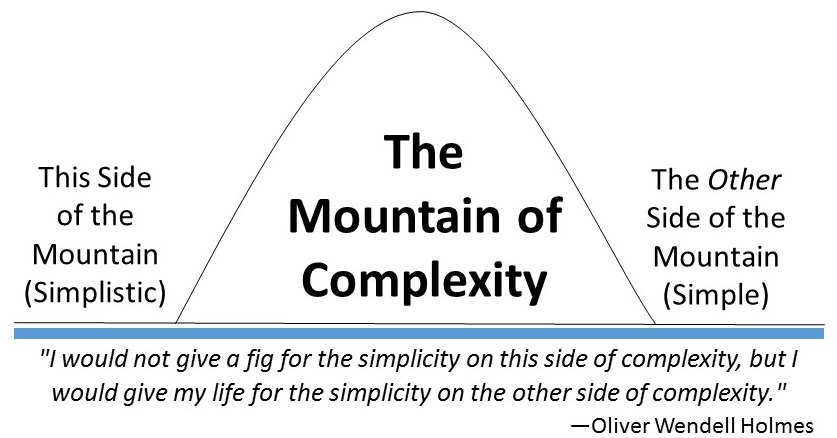
Some people take great satisfaction in utilizing complicated words to communicate. Big words can make us feel sophisticated and masters of some special body of knowledge while everyone else gets to figure out “what did that person just say?” Complicated words may feed our egos-but they often block understanding. How about we use simple words we all understand?

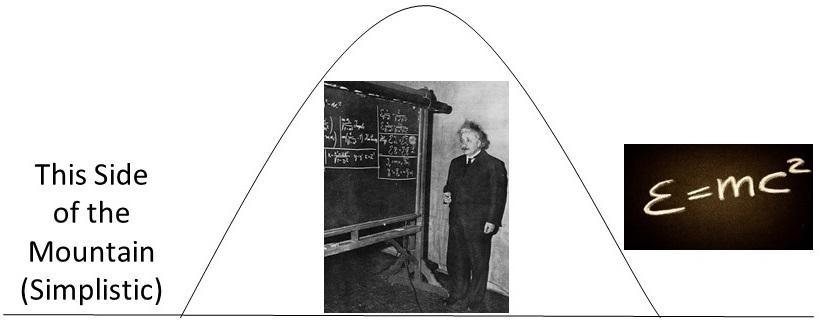
Slide2True simplicity is valuable. Albert Einstein got that. So did Steve Jobs. Yet, we often stay mired in complexity.  When we get through complexity to the essence of something, we find a core truth that can spark innovation and action in many dimensions. I think of complexity as a mountain of “stuff” that we must work through to get to the powerful, simple truths on the other side of it.  Einstein did that by working through huge complexity to develop the theory of relativity. The relationship between energy and matter is certainly a simple and very powerful truth.  iPhones aren’t quite at the same level—but they are both simple and sweet!

Performance

Almost every team, business, non-profit (or any group of people) will answer “Of course!” when asked if they’d like to improve their performance.  Getting better tomorrow is built into our DNA. But how? There are a huge number of theories, frameworks, models, hypothesis, concepts, tools and really big words on the topic of improving performance. There are so many possibilities to pick from: Capability, talent, competencies, knowledge, skills, engagement, commitment, passion, training, motivation, purpose, execution, extrinsic rewards, discipline, learning, performance, development, accountability, recognition and so many more. All of them with lots of syllables. What if we could reduce the complexity of all that and identify the fundamental drivers of performance?  What if we moved through the confusing academic and HR-ish language to what really makes a difference?   We might be getting to something that we could all understand, act on and use in many ways to do better tomorrow than we did today.

Simple words are clearer. More powerful. Unmistakable in their meaning. They get to the essence of things.

When it comes to improving our performance, there are three truly simple ideas on the other side of “Mount Complexity.”

Can—do we have the ability to do what we have in mind?

Want—do we want to do it?

Do—are we doing it?

Nothing happens until we get to Do.

Do doesn’t happen without Can and Want.

If we have Can but no Want, nothing happens.

That’s why Want is always the fundamental driver of individual and team performance. Desire beats require— because when we truly, deeply Want to do something, we will do whatever it takes to figure out the Can and then Do it.  When we Want to do something Together—almost anything is possible (like putting a man on the moon with less computing power than we have in our “simple” iPhones today).  You know it’s true— look at what you’ve accomplished in your own life that makes you proud. What role did Want play in that?

Can. Want. Do. is about these three simple truths that are the formula for performance and results for all individuals and teams (I like the word teams more than organizations—it is simpler and more real).

I’m looking forward to exploring Can, Want and Do with you. That’s exactly what this blog will do. Our journey has begun.  Let’s learn together.

P.S. Yes, words are more powerful than swords. After all, if we take words out of swords, all that will be left is an “s”—and there’s not much we can do with that. No matter how much we want to.